English
 عربى

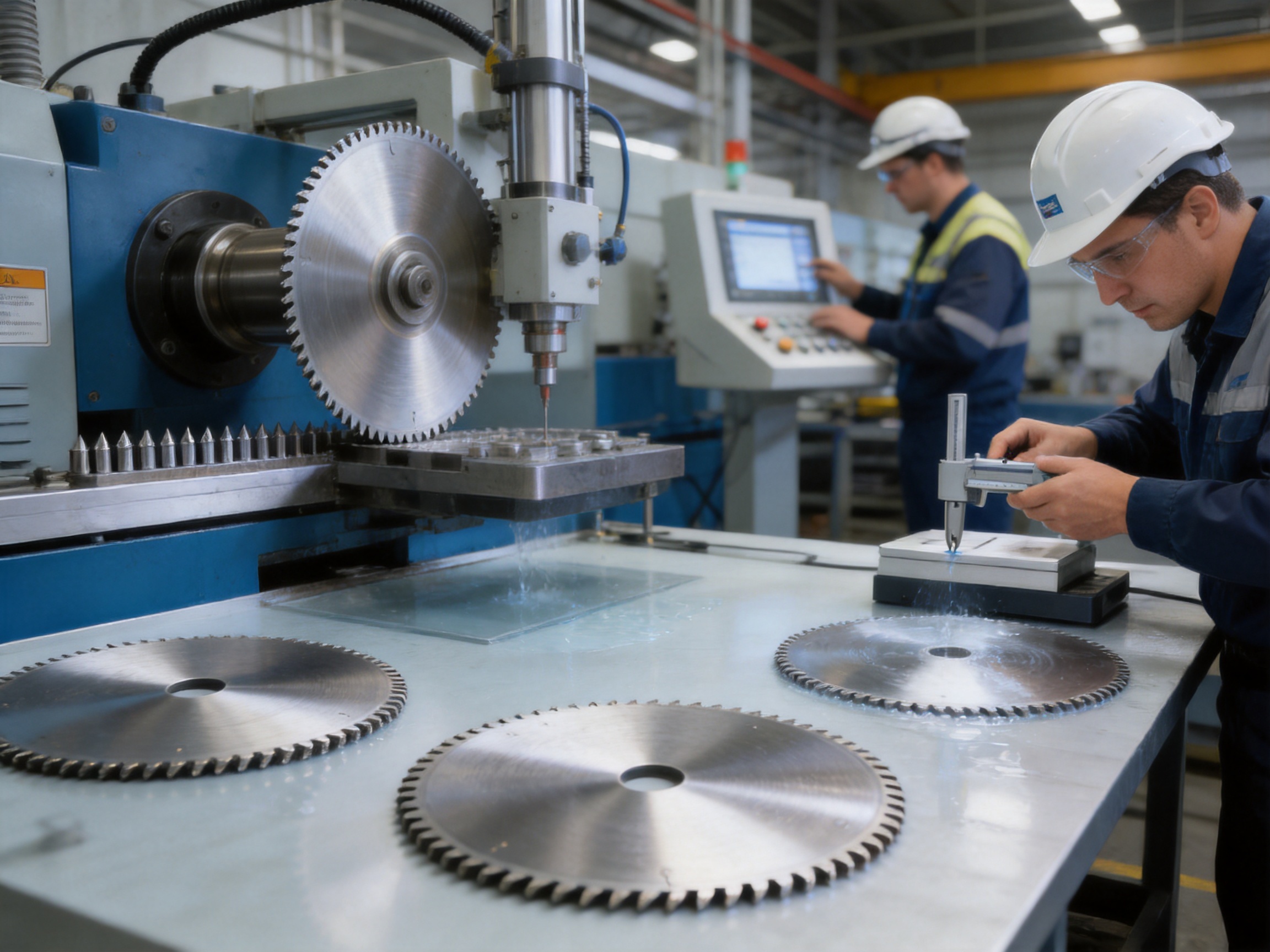
The 355 × 72T Edgy Cold Cutter is a high-performance circular saw blade developed for demanding metal-cutting applications. With a 355 mm diameter and 72 precision-engineered teeth, it is designed to provide clean, accurate, and consistent cuts across a broad range of metallic materials. The blade is suitable for professional workshops, industrial production lines, construction projects, automotive manufacturing, HVAC installation, plumbing work, and general metal fabrication.
Unlike ordinary abrasive discs or general-purpose saw blades, a cold cutter is engineered to remove material through controlled tooth engagement rather than through constant friction and grinding. This cutting principle can help reduce heat generation, minimize burr formation, improve dimensional accuracy, and reduce the amount of secondary finishing required after sawing. For users who need repeatable results and efficient production, the 355 × 72T configuration offers a practical balance between cutting speed, surface quality, and service life.
The blade is manufactured by Yongkang Saima Machinery Technology Co., Ltd., a professional power-tool and cutting-equipment manufacturer based in Zhejiang, China. The company has developed from a small workshop into an integrated manufacturer with research and development, production, testing, customization, and sales capabilities. Its product range includes mobile cutting machines, metal cut-off machines, aluminum sawing machines, angle grinders, wall planing machines, cutting-machine motor accessories, and circular saw blades.
This article examines the technical characteristics, competitive advantages, manufacturing strengths, application possibilities, maintenance requirements, and purchasing considerations associated with the 355 × 72T Edgy Cold Cutter. It also explains how the blade can support production efficiency and why the manufacturer’s integrated capabilities are important for distributors, industrial buyers, and professional end users.
1. Product Overview
The 355 × 72T Edgy Cold Cutter is a circular saw blade intended for accurate cutting of metal stock. Its 355 mm outside diameter provides a useful cutting format for compatible stationary or mobile metal-cutting saws, while the 72-tooth design supports fine and controlled cutting performance. The exact bore size, kerf, plate thickness, maximum rotational speed, and machine compatibility should always be confirmed before installation because these specifications can vary according to the intended machine and production requirement.
The term “72T” refers to the number of teeth around the blade. A higher tooth count generally means that more teeth engage with the workpiece during each revolution. This configuration is commonly selected when a smooth cut, reduced burr formation, and improved finish are more important than the aggressive chip removal associated with a low-tooth-count blade.
The blade is described as an edgy cold cutter and is designed for cutting materials such as mild steel, stainless steel, aluminum, and other non-ferrous alloys. Material selection, tooth geometry, cutting speed, feed rate, clamping method, and coolant or lubrication conditions all influence the final result. Therefore, the blade should be considered part of a complete cutting system rather than an isolated component.
In professional applications, a blade must perform consistently over many cutting cycles. A product that produces one excellent cut but quickly loses sharpness may create more expense than a blade that provides stable performance over a longer operating period. The 355 × 72T Edgy Cold Cutter is intended to address this requirement through precision tooth design, durable carbide-tipped construction, controlled heat behavior, and compatibility with repeat-production environments.
2. Why Cold Cutting Matters in Metalworking
Metal cutting methods differ substantially in the amount of heat, mechanical force, noise, dust, and finishing work they create. Abrasive cutting wheels remove material by friction and produce sparks, high temperatures, and significant material loss. A conventional cutting blade may reduce some of these effects, but its performance depends heavily on tooth design and the quality of its construction.
A cold-cutting blade uses engineered teeth to form and remove chips from the workpiece. Because the cutting action is more controlled, less energy is converted into frictional heat when the blade is correctly matched to the material and machine. Lower heat generation can help preserve the hardness of the cutting edges, reduce discoloration, and limit thermal distortion in the workpiece.
Cold cutting can be especially valuable when the parts must be assembled immediately after sawing. A clean cut can reduce deburring, grinding, filing, or additional machining. In high-volume production, even a small reduction in secondary operations can create considerable savings in labor, energy, and processing time.
Another advantage is the potential for improved workplace conditions. Compared with abrasive cutting, cold sawing may create fewer sparks and less airborne abrasive dust. However, operators should still use appropriate guarding, eye protection, hearing protection, gloves where suitable, and other personal protective equipment. Metal chips can be sharp, and no cutting operation should be performed without adequate machine safety measures.
3. Precision Tooth Configuration
The 72-tooth configuration is one of the main performance characteristics of the 355 × 72T blade. Each tooth is shaped to engage the material in a controlled manner, remove a manageable chip, and maintain a stable cutting path. High tooth density can support a smoother edge, particularly when cutting thin-wall tubing, sheet, profiles, and other workpieces where rough engagement could cause vibration or edge damage.
A fine-tooth blade is not automatically the best option for every material or thickness. If the tooth count is too high for a very thick workpiece, the gullets may not have enough capacity to remove chips efficiently. If the feed rate is too high, the teeth may experience excessive loading. For this reason, the 72T configuration is most effective when the material thickness, machine power, clamping method, and operating parameters are properly matched.
When used within its intended conditions, the high tooth count can provide several benefits:
1. A smoother cut surface with less visible tooth marking.
2. Reduced burr formation at the entry and exit points.
3. More consistent dimensional results in repeat production.
4. Lower finishing requirements before welding, assembly, or coating.
5. Improved control when cutting profiles, tubes, and accurately sized components.
The tooth tips are made from tungsten carbide-tipped material. Carbide is valued in industrial cutting because it can maintain a sharp cutting edge under demanding conditions when properly designed and operated. The substrate and carbide grade, brazing quality, tooth geometry, grinding accuracy, and sharpening process all influence the real-world performance of a TCT blade.
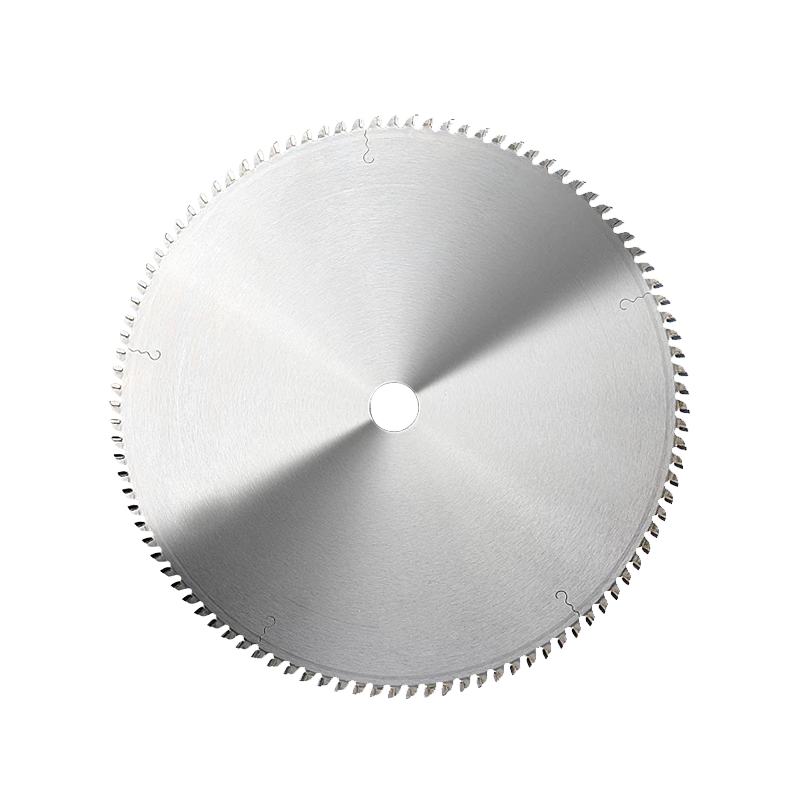
355*72T Edgy Cold Cutter
4. Main Advantages of the 355 × 72T Edgy Cold Cutter
4.1 Clean and Accurate Cutting
The most important advantage of the blade is its ability to produce clean, accurate cuts. The 72 precision-engineered teeth are arranged to provide controlled engagement with the workpiece. This can be beneficial in applications where the cut face will be welded, fitted, painted, assembled, or used as a reference surface.
Accurate cutting is not limited to the appearance of the cut. It also affects the overall manufacturing process. When parts are cut to consistent lengths and angles, operators spend less time correcting dimensional variation. Accurate components can improve the alignment of frames, supports, pipes, brackets, and fabricated assemblies.
4.2 Reduced Burr Formation
Burrs are unwanted sharp edges or projections left on a workpiece after cutting. They can create safety hazards, interfere with assembly, damage seals, and increase finishing costs. The blade’s fine tooth arrangement and controlled cutting action are intended to minimize burrs under suitable operating conditions.
Actual burr performance depends on many factors, including material grade, wall thickness, tooth sharpness, feed speed, workpiece support, and the condition of the machine. Nevertheless, a high-quality cold cutter can reduce the need for extensive deburring compared with less suitable blades or abrasive cutting methods.
4.3 Efficient Heat Dissipation
Heat is a significant concern in metal sawing. Excessive heat can soften the cutting edge, discolor the workpiece, affect dimensional stability, and shorten blade life. The 355 × 72T Edgy Cold Cutter is designed to control heat generation through its tooth configuration and cutting geometry.
Efficient heat management does not mean that the blade remains completely cool under every condition. Cutting thick or hard materials, using an excessive feed rate, operating at an unsuitable speed, or allowing chips to accumulate can still generate substantial heat. Correct machine settings, adequate workpiece clamping, and suitable lubrication or coolant practices remain important.
4.4 Durable TCT Construction
The tungsten carbide-tipped construction is intended to provide resistance to wear and maintain cutting performance over extended use. Carbide teeth can offer higher wear resistance than many standard steel tooth designs, especially when cutting metal with appropriate parameters.
Durability is also influenced by the blade body. A stable blade plate helps maintain tooth alignment and cutting accuracy. If the body becomes distorted, overheated, or damaged, even sharp carbide teeth may not perform correctly. A professional manufacturing process must therefore control not only tooth production but also body flatness, tooth positioning, brazing, grinding, and final inspection.
4.5 High Production Efficiency
The blade is designed for efficient operation in professional and industrial environments. Its tooth geometry supports a stable cutting cycle, while its 355 mm format can be suitable for common metal-cutting equipment that accepts the corresponding blade dimensions.
In a production environment, efficiency involves more than cutting speed. It includes the time needed to position the workpiece, complete the cut, remove the part, perform finishing, replace the blade, and clean the work area. A blade that produces accurate cuts with limited post-processing can contribute to a shorter total cycle time even if its nominal cutting speed is not the highest available.
4.6 Versatility Across Metal Applications
The 355 × 72T Edgy Cold Cutter is suitable for a wide range of metalworking tasks. It can be used for various mild-steel profiles, selected stainless-steel applications, aluminum sections, and other non-ferrous materials when the blade and machine settings are appropriate.
This versatility can simplify purchasing and inventory management for workshops that handle several types of work. Instead of using a completely different cutting method for every project, users may be able to apply the blade to multiple compatible jobs. Material-specific recommendations should be confirmed before production use, especially for thick stainless steel, hardened alloys, coated stock, or unusual profiles.
5. Competitive Advantages Over General-Purpose Cutting Products
The 355 × 72T Edgy Cold Cutter competes not only with other circular saw blades but also with abrasive wheels, low-tooth-count blades, and lower-quality imported products. Its advantages are most apparent when the customer values cut quality, repeatability, and long-term operating cost rather than simply the lowest initial purchase price.
5.1 Compared with Abrasive Cutting Wheels
Abrasive wheels can be useful for many cutting tasks, but they typically create substantial friction and heat. They may produce sparks, abrasive dust, wider kerfs, and a rougher cut surface. The operator may also need to remove burrs or grind the cut face before the part can be used.
A cold cutter can offer a cleaner cutting process with less material loss and reduced secondary finishing. In applications involving repeated straight cuts, tubing, profiles, and structural components, these benefits can improve both productivity and workplace cleanliness.
5.2 Compared with Low-Tooth-Count Blades
Low-tooth-count blades generally provide larger gullets and more aggressive chip removal. They can be useful for thicker materials or faster rough cutting. However, they may leave a coarser cut surface and can produce more vibration when used on thin-wall or precision components.
The 72T design emphasizes smooth engagement and finish quality. It is therefore attractive to users who require accurate, repeatable cuts and want to reduce deburring or machining after sawing. The correct choice still depends on the workpiece. A high-tooth-count blade should not be forced into applications where a larger gullet and more aggressive chip evacuation are required.
5.3 Compared with Low-Quality TCT Blades
Low-cost blades may use inconsistent tooth placement, uneven brazing, poor grinding, unstable blade bodies, or inadequate quality control. These problems can lead to vibration, uneven wear, premature tooth failure, poor surface finish, and inconsistent cutting dimensions.
A professionally manufactured blade is expected to receive greater attention throughout the production process. Consistent raw materials, controlled machining, accurate tooth grinding, secure carbide attachment, and final inspection can create a more reliable product. For industrial customers, this reliability is valuable because unplanned blade replacement can interrupt production and increase labor costs.
5.4 Total Cost of Ownership
The purchase price of a blade is only one part of its cost. A more meaningful evaluation includes the number of cuts produced, the quality of those cuts, the amount of finishing required, the frequency of blade changes, the risk of damaged workpieces, and the time spent correcting dimensional errors.
The 355 × 72T Edgy Cold Cutter is designed to provide value through durability, precision, and reduced maintenance requirements. When properly selected and operated, it can support a lower total cost of ownership than a product that needs frequent replacement or creates substantial secondary work.
| Evaluation Factor | 355 × 72T Edgy Cold Cutter | Typical Abrasive Wheel | General-Purpose Low-Tooth Blade |
|---|---|---|---|
| Cutting principle | Controlled tooth cutting | Friction and abrasive removal | Tooth cutting with larger chip load |
| Surface finish | Generally smooth when correctly applied | Often rougher and heat-affected | Dependent on tooth design and material |
| Burr control | Designed to reduce burr formation | May require additional deburring | Variable according to application |
| Heat generation | Controlled through cutting geometry | Usually high | Moderate to high if overloaded |
| Suitable production use | Repeatable metal cutting and fabrication | General repair and rough cutting | Broad cutting tasks, often less finish-focused |
| Maintenance focus | Inspection, cleaning, and professional sharpening | Frequent wheel replacement | Tooth and body inspection |
6. Applications in Metal Fabrication
6.1 Cutting Pipes and Tubes
Fabricators often need to cut round pipes, square tubes, rectangular sections, and other hollow profiles to precise lengths. A clean cut is useful because it reduces the time needed to prepare the ends for welding, threading, fitting, or sealing.
The 72T configuration can be particularly helpful for thin-wall sections where excessive tooth impact may deform the profile. Proper clamping is essential. If a tube moves or vibrates during cutting, the cut may become uneven regardless of blade quality.
6.2 Cutting Structural Steel
Construction and fabrication companies use metal saws to prepare beams, channels, angles, plates, and supports. Accurate cuts help ensure that structural components fit correctly during assembly. In repetitive projects, consistent cutting can improve workflow and reduce measurement errors.
For thick structural materials, operators should confirm that the blade’s tooth pitch and machine capacity are appropriate. The 355 × 72T blade may be well suited to specific profiles and thicknesses, but it should not be used beyond the manufacturer’s recommended conditions.
6.3 Automotive Manufacturing
Automotive production often involves tubes, brackets, panels, exhaust components, frames, and formed sections. These parts may require clean edges and consistent dimensions before welding, bending, coating, or assembly.
A controlled cold-cutting process can reduce thermal influence on the workpiece and limit the amount of post-cut preparation. In a production environment, the ability to complete a cut and move directly to the next process can improve line efficiency.
6.4 HVAC and Plumbing
HVAC and plumbing contractors cut pipes, ducts, channels, and support materials on site or in fabrication shops. A blade that provides accurate cuts can help installers achieve better joints and cleaner system layouts.
For these applications, portability, ease of use, and reliable performance are also important. The blade should be fitted to a compatible machine, and the operator should follow safe procedures for securing long or awkward workpieces.
6.5 Aluminum and Non-Ferrous Metals
Aluminum and other non-ferrous alloys have different cutting characteristics from steel. They may generate long chips, adhere to tooth surfaces, or require specialized tooth geometry and lubrication. The 355 × 72T blade is described as suitable for selected aluminum and non-ferrous applications, but users should verify compatibility for the exact alloy, thickness, and machine speed.
When cutting aluminum, clean teeth, correct feed pressure, and effective chip removal are especially important. Accumulated chips can affect the cutting path and increase friction. The blade should be inspected frequently when used for materials that are prone to adhesion.
7. Manufacturing Strengths of the Producer
Product performance is closely connected to manufacturing capability. A reliable circular saw blade requires more than a suitable design on paper. It depends on material control, specialized production equipment, experienced operators, process inspection, and the ability to maintain consistency across large quantities.
Yongkang Saima Machinery Technology Co., Ltd. has more than 20 years of industry experience and operates from a 30,000-square-meter intelligent production facility. The company’s background includes the development and manufacture of power-tool motors, cutting machines, accessories, and circular saw blades. This product breadth gives the manufacturer practical knowledge of both cutting equipment and the consumable components used with that equipment.
7.1 Integrated Research and Development
The company integrates research and development with production and sales. This structure allows product requirements to move more efficiently from customer feedback to design, testing, manufacturing, and delivery.
For a blade manufacturer, R&D may involve tooth geometry, carbide selection, blade-body structure, heat management, application matching, and compatibility with different cutting machines. It can also include improvements in production efficiency, packaging, custom dimensions, and product consistency.
Because the company manufactures complete cutting machines as well as accessories, it can consider the interaction between blade behavior and machine performance. This broader perspective is valuable when customers require a complete cutting solution rather than an isolated replacement blade.
7.2 Multiple Production Lines
The manufacturer operates six main production lines. Multiple lines can support higher output, better scheduling flexibility, and a more stable response to different order quantities. They also create opportunities to organize production according to product type, size, customization requirement, or customer specification.
For wholesalers and distributors, production capacity is an important purchasing consideration. A supplier must be able to support initial orders, repeat orders, seasonal demand, and possible product expansion. A manufacturer with broader capacity can reduce the risk of extended lead times and inconsistent supply.
7.3 Own Foundry and Processing Facilities
The company has its own foundry and processing plant. In-house capabilities can improve control over important stages of production and reduce dependence on multiple external suppliers. This may help the manufacturer coordinate material preparation, machining, assembly, and inspection more effectively.
For customized products, in-house processing is particularly useful. Buyers may request different dimensions, packaging formats, tooth arrangements, branding requirements, or machine-compatible specifications. Custom production depends on the ability to adapt manufacturing processes without compromising quality or delivery schedules.
7.4 Testing and Laboratory Equipment
Advanced testing and laboratory equipment supports product verification. In the case of circular saw blades, relevant checks may include dimensional inspection, blade flatness, tooth position, carbide attachment, balance, cutting performance, and wear behavior.
Testing is important because visual inspection alone cannot confirm every aspect of a blade. A product may look acceptable but still produce vibration if its tooth spacing or balance is inconsistent. Structured testing helps identify defects earlier and provides a basis for process improvement.
7.5 Customization Capability
Different customers may require different blade specifications. A distributor serving construction contractors may prefer one configuration, while an automotive supplier may need another. Customization may involve diameter, bore, tooth count, tooth geometry, material suitability, packaging, labels, or private-label requirements.
The company’s custom production capabilities allow it to respond to varied customer requirements. Buyers should provide complete technical information when requesting a customized product, including the target material, thickness, machine model, spindle speed, desired finish, production volume, and expected service life.
7.6 International Service and Delivery
The manufacturer serves customers in more than 35 countries and regions. International experience can help with export documentation, packaging, communication, order coordination, and delivery planning. A 24-hour service response also supports faster handling of technical questions and customer inquiries.
For overseas buyers, responsive communication is important because blade selection often involves technical details. Prompt clarification of bore dimensions, speed limits, material compatibility, and packaging requirements can prevent ordering errors and reduce delays.
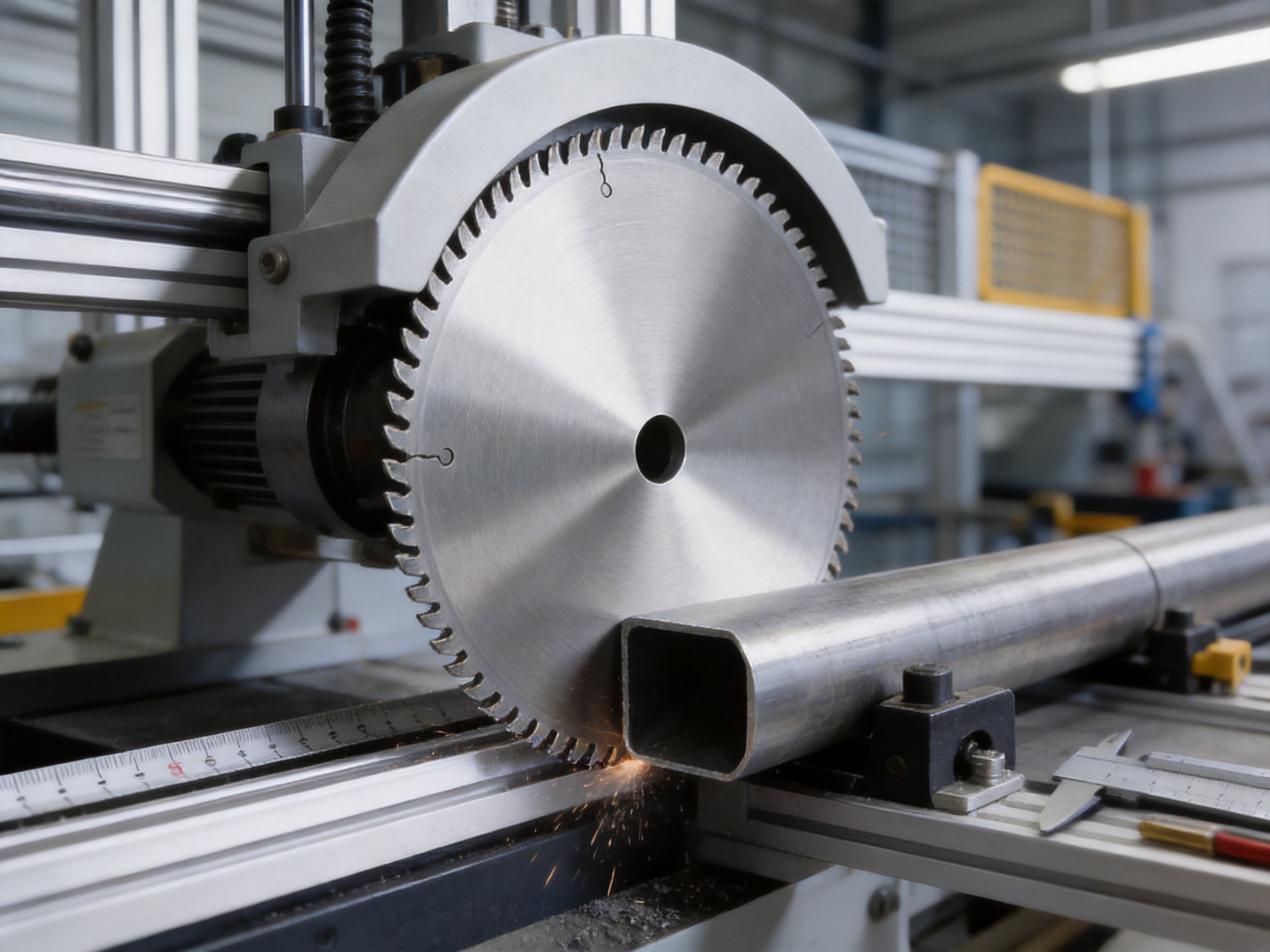
8. Production Process and Quality Considerations
Although specific internal process parameters may vary, the manufacture of a professional TCT circular saw blade normally involves several controlled stages. Each stage contributes to the final product’s safety, cutting performance, and service life.
8.1 Material Preparation
The blade body must be produced from material capable of maintaining structural stability during rotation and cutting. Material consistency, thickness, flatness, and resistance to deformation are important considerations.
Carbide tips must also be selected according to the intended application. Different carbide grades may be suited to different combinations of hardness, toughness, wear resistance, and cutting speed. The manufacturer’s technical team can match the tooth material and geometry to the target workpiece.
8.2 Blade-Body Processing
The steel body is processed to create the required diameter, bore, tooth slots, expansion features, and other structural details. Accurate machining is essential because even small dimensional errors can affect balance and cutting stability.
The body must remain flat and concentric. A distorted or poorly balanced blade may create vibration, noise, uneven tooth loading, and premature wear. Controlled processing and inspection help maintain the mechanical integrity of the finished blade.
8.3 Carbide Tip Attachment
The carbide teeth are attached to the blade body through a controlled brazing or equivalent joining process. The connection must be strong enough to withstand repeated impact and thermal stress. Poor attachment can result in tooth loosening, chipping, or failure during operation.
Each tooth should be positioned accurately and securely. Consistent tooth placement helps ensure that the cutting load is distributed evenly around the blade. This is especially important for a fine-tooth product such as the 72T configuration.
8.4 Tooth Grinding and Sharpening
After the carbide tips are attached, precision grinding creates the intended tooth profile, rake angle, clearance angle, and cutting edge. The quality of this operation strongly affects cut quality, feed behavior, chip formation, and blade life.
Uniform grinding is essential. If one tooth is significantly higher, lower, sharper, or more heavily loaded than the others, the blade may vibrate or produce an irregular cut. Advanced grinding equipment and experienced process control help maintain consistency from tooth to tooth.
8.5 Balancing and Inspection
Finished blades should be inspected for dimensions, flatness, balance, tooth condition, attachment quality, and visible defects. Depending on the production system, performance tests may also be conducted to assess cutting behavior or verify selected operating characteristics.
Inspection does not replace correct operation. Even a carefully manufactured blade can be damaged by impact, incorrect mounting, excessive speed, poor clamping, or cutting an unsuitable material. Quality manufacturing and responsible use must work together.
9. Operating Recommendations
9.1 Confirm Machine Compatibility
Before installation, verify the blade diameter, bore size, kerf, plate thickness, rotational direction, and maximum permitted speed. The machine must be capable of operating the blade safely. Never assume that two blades with the same outside diameter are interchangeable.
The arbor, flange, guard, and spindle should be clean and undamaged. The blade must sit flat against the mounting surfaces. Tightening should follow the machine manufacturer’s instructions and should not deform the blade body.
9.2 Secure the Workpiece
Workpiece movement is a major cause of poor cutting results and safety incidents. Pipes, profiles, bars, and sheets should be supported and clamped appropriately. Long material should be supported on both sides where possible to prevent sagging, pinching, or sudden movement.
Correct clamping also improves blade life. A workpiece that vibrates can create repeated impact loading on the teeth. This may cause chipped carbide, uneven wear, rough cuts, and increased noise.
9.3 Use Suitable Speed and Feed
Cutting speed and feed pressure should be selected according to the material and thickness. Excessive feed can overload the teeth and generate heat, while insufficient feed can cause rubbing rather than efficient chip formation.
Operators should monitor sound, vibration, chip shape, cut quality, and motor load. Changes in these indicators may signal a dull blade, incorrect settings, inadequate clamping, or an unsuitable application.
9.4 Manage Lubrication and Chips
Some metal-cutting applications benefit from suitable coolant or minimum-quantity lubrication. The correct method depends on the machine, material, blade design, and workplace requirements. Lubrication can help control heat and reduce chip adhesion, but it must be used safely and consistently.
Chips should be removed from the cutting area according to the machine’s instructions. Operators should never clear chips by hand while the machine is running. A brush, chip hook, or appropriate tool should be used after the machine has stopped and the blade has come to a complete halt.
9.5 Inspect the Blade Regularly
Before each use, inspect the blade for missing or damaged teeth, cracks, distortion, excessive wear, carbide loosening, and contamination. A damaged blade should not be returned to service without professional evaluation.
When performance declines, the blade may require professional sharpening or replacement. Attempting to reshape carbide teeth with unsuitable equipment can reduce accuracy and create safety risks.
10. Maintenance and Service Life
Proper maintenance helps preserve the performance of the 355 × 72T Edgy Cold Cutter. After use, the blade should be cleaned to remove chips, oil, resin-like contaminants, and metal deposits. Cleaning should be performed with the blade removed or the machine fully isolated from its power source.
Blades should be stored in a dry location, protected from impact, moisture, and contact with other tools. Teeth should not be allowed to strike hard surfaces. If multiple blades are stored together, protective separators can help prevent carbide damage.
Service life depends on the material being cut, production volume, operating parameters, machine condition, lubrication, clamping, and operator technique. A blade used on clean mild steel under stable conditions may behave very differently from one used on abrasive scale, hardened material, contaminated stock, or interrupted sections.
Users should establish a simple performance record. Useful information includes the date installed, materials cut, number of cuts, observed surface quality, sharpening dates, and reason for replacement. This record helps determine the real cost per cut and assists in identifying process problems.
11. Purchasing Guidance for Distributors and Industrial Buyers
When purchasing the 355 × 72T Edgy Cold Cutter in volume, buyers should evaluate more than the product name and diameter. They should request a complete specification sheet and verify that the blade matches the machines and materials used by their customers.
Important purchasing questions include:
1. What is the exact bore size and blade-body thickness?
2. What materials and thickness ranges are recommended?
3. What is the maximum safe rotational speed?
4. Is the blade designed for dry cutting, lubricated cutting, or a specific coolant system?
5. Can the manufacturer provide customized tooth geometry or packaging?
6. What inspection procedures are used during production?
7. What are the expected lead times for standard and customized orders?
8. Is technical support available for machine and material matching?
9. Can repeat orders maintain the same specification and packaging standard?
10. What sharpening or after-sales guidance is available?
For wholesalers, consistent supply and clear product documentation are especially important. A distributor should be able to explain the blade’s intended application, operating limitations, and compatibility requirements. Accurate information reduces returns and helps end users achieve better results.
12. Role of the Manufacturer in Customer Success
A blade supplier’s responsibility should extend beyond shipping products. Technical communication, product matching, customization support, quality consistency, and after-sales response can all affect the customer’s experience.
Yongkang Saima Machinery Technology Co., Ltd. emphasizes professional power-tool solutions and maintains capabilities in R&D, production, testing, and customer service. Its experience in cutting machines and motor accessories allows it to understand the practical environment in which the circular saw blade is used.
The company’s stated strengths include competitive costs, reliable quality, production capacity, custom manufacturing, advanced testing equipment, and multiple production lines. These capabilities are relevant to customers that need stable long-term supply rather than occasional spot purchases.
The company also has experience developing products from imitation toward innovation. This development path reflects the importance of learning from market requirements and improving products through continued engineering work. For industrial buyers, an evolving manufacturer may be better positioned to support new materials, changing machine designs, and customized product requirements.
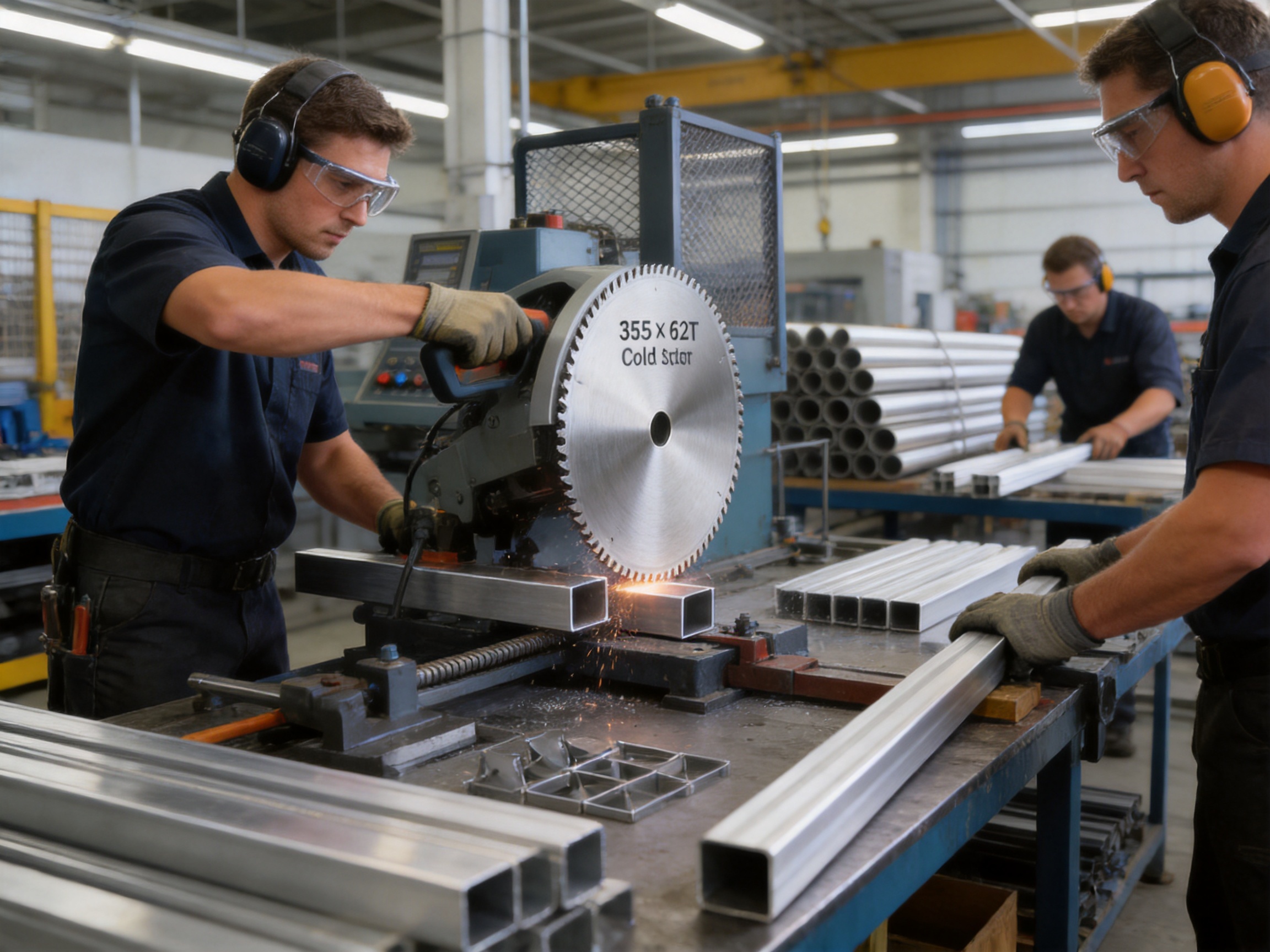
13. Environmental and Workplace Considerations
Efficient cutting can contribute to responsible resource use. A blade that produces a narrow, accurate cut may reduce material waste compared with a wider abrasive kerf. Longer service life can also reduce the number of discarded blades and the resources required for replacement products.
Reduced secondary processing can save electricity and labor. If a component does not require extensive grinding after cutting, the total energy consumption of the manufacturing process may be lower. These benefits depend on actual operating conditions and should be evaluated using production data rather than assumed automatically.
Workplace safety remains essential. Operators should use the machine guard, wear suitable eye and hearing protection, avoid loose clothing, keep hands away from the cutting zone, and follow lockout procedures during maintenance. Metal chips and sharp edges should be handled carefully.
Employers should also provide training on blade installation, machine settings, workpiece clamping, inspection, and emergency procedures. A high-quality blade cannot compensate for unsafe equipment or inadequate operator training.
14. Frequently Asked Questions
Q1: What does 355 × 72T mean?
The number 355 refers to the blade’s nominal outside diameter in millimeters. The designation 72T means that the blade has 72 teeth. The exact bore, kerf, body thickness, and speed rating must be confirmed separately.
Q2: What materials can the blade cut?
The blade is intended for compatible metal-cutting applications involving materials such as mild steel, stainless steel, aluminum, and other non-ferrous alloys. The recommended material range depends on the exact grade, thickness, machine, tooth geometry, and operating conditions.
Q3: Is the 72-tooth blade suitable for thick steel?
It may be suitable for selected steel profiles and thicknesses, but a high tooth count is not ideal for every thick or heavy section. Buyers should confirm the application with the manufacturer and compare the tooth pitch with the material thickness and machine capacity.
Q4: Can this blade be used on any 355 mm cutting machine?
No. The blade must match the machine’s bore, spindle speed, mounting system, guard clearance, kerf requirements, and intended cutting method. The machine manufacturer’s specifications and the blade supplier’s recommendations should both be checked.
Q5: Does the blade eliminate burrs completely?
No cutting blade can guarantee zero burrs in every application. However, the 72T design and controlled cutting geometry are intended to reduce burr formation and produce a smoother cut when the material, machine, feed rate, and clamping conditions are appropriate.
Q6: Does cold cutting mean that no heat is produced?
No. Cold cutting generally means that heat generation is lower and more controlled than with highly abrasive cutting methods. Heat can still develop when cutting hard materials, using excessive feed pressure, operating at an unsuitable speed, or allowing chips to accumulate.
Q7: How can blade life be extended?
Use the correct machine settings, secure the workpiece firmly, maintain suitable lubrication or coolant practices, keep the blade clean, avoid impact loading, and inspect the blade regularly. Professional sharpening may restore performance when the teeth are worn but not damaged.
Q8: Is the blade suitable for production lines?
Its precision tooth configuration, durable TCT construction, and focus on repeatable cutting make it suitable for many production-oriented applications. Production users should conduct a trial on their specific material and establish operating parameters before full-scale deployment.
Q9: Can the manufacturer provide customized products?
The manufacturer has custom production capabilities. Customers should provide detailed requirements such as diameter, bore, tooth count, target material, thickness range, machine type, packaging, quantity, and any private-label needs.
Q10: What should a buyer request before placing an order?
A buyer should request the complete technical specification, compatibility information, recommended operating limits, packaging details, quality documentation where applicable, lead time, and after-sales support arrangements.
15. Conclusion
The 355 × 72T Edgy Cold Cutter is designed for professionals who need accurate, efficient, and repeatable metal cutting. Its 355 mm format and 72-tooth configuration support smooth cutting, reduced burr formation, controlled heat generation, and consistent results when matched correctly to the machine and workpiece.
Its tungsten carbide-tipped construction is intended to provide durability and wear resistance, while its precision tooth design supports applications in metal fabrication, construction, automotive manufacturing, HVAC, plumbing, and general industrial production. Compared with abrasive wheels and less specialized blades, it can offer advantages in cut quality, material efficiency, finishing requirements, and total production productivity.
The manufacturer strengthens the product offering through more than 20 years of industry experience, a 30,000-square-meter production facility, six main production lines, integrated R&D, an in-house foundry and processing plant, testing equipment, custom production capabilities, and international service experience. These resources are important for buyers who require reliable quality, stable supply, technical support, and the ability to develop customized solutions.
For the best results, users should verify machine compatibility, select appropriate cutting parameters, clamp the workpiece securely, manage heat and chips, inspect the blade regularly, and follow all applicable safety procedures. With proper application and maintenance, the 355 × 72T Edgy Cold Cutter can become a dependable component of a professional metal-cutting system.
References
1. Industrial Circular Saw Blade Selection Principles, technical reference material for tooth count, cutting geometry, and material matching.
2. Tungsten Carbide Cutting Tool Engineering, reference material concerning carbide grades, wear resistance, brazing, and tooth grinding.
3. Metal Fabrication Workshop Safety Practices, reference material covering workpiece clamping, machine guarding, chip handling, and personal protective equipment.
4. Cold Sawing Process Fundamentals, technical reference material concerning heat control, burr reduction, feed rates, and production efficiency.
5. Manufacturer Product Information for the 355 × 72T Edgy Cold Cutter, including product description, application guidance, and stated performance characteristics.
6. Company Manufacturing Profile and Product Capability Information, including R&D, production lines, factory resources, testing capability, customization, and international service coverage.