English
 عربى

The 65/9 motor accessory set, featuring a 94 mm stator and a 53.4 mm rotor, is designed for cutting machines and other compact power-tool motor applications that require dependable torque, stable rotation, efficient energy conversion, and long service life. The stator and rotor form the electromagnetic heart of a motor. Their dimensional accuracy, material quality, winding performance, and compatibility with the surrounding motor assembly directly influence cutting power, operating smoothness, heat generation, noise, vibration, and service durability.
For manufacturers, distributors, repair specialists, and professional users, selecting the correct motor accessory is not simply a matter of matching an external diameter. The replacement or production component must work correctly with the motor housing, bearings, commutator or electrical connection system, cooling structure, shaft arrangement, and power requirements. The 65/9 configuration provides a practical solution for applications where a compact motor must deliver reliable output without unnecessary bulk.
This article examines the construction, operating value, manufacturing advantages, application suitability, quality considerations, and sourcing benefits associated with the 65/9 motor accessories. It also explains how a specialized manufacturer can support consistent production through engineering development, material control, precision processing, testing, customization, and supply-chain coordination.
Product Overview
The 65/9 motor accessory model is identified by a stator with an approximate diameter of 94 mm and a rotor with a specified size of 53.4 mm by 45 mm in height or active length, according to the available product information. The product is intended for use in cutting-machine motor assemblies and related power-tool motor systems.
| Item | Specification |
| Product type | Cutting machine motor accessory set |
| Model | 65/9 |
| Stator diameter | 94 mm |
| Rotor specification | 53.4 mm x 45 mm |
| Primary application | Cutting machines and compact power-tool motors |
| Typical functions | Electromagnetic conversion, torque generation, and motor rotation |
| Suitable purchasing format | Replacement parts, production components, and customized motor assemblies |
The listed dimensions should be checked against the complete motor design before installation. Important verification points may include shaft diameter and length, bearing seats, commutator position, winding arrangement, lamination stack, mounting clearances, electrical ratings, and the motor housing. Dimensional compatibility is essential for safe and efficient operation.
Although the stator and rotor are often discussed as separate parts, they should be considered as a matched operating system. The stator generates the stationary magnetic field, while the rotor responds to that field and converts electromagnetic force into rotational movement. If either part has poor concentricity, unsuitable magnetic material, inconsistent winding quality, or incorrect assembly dimensions, the complete motor may experience reduced output and premature wear.
Why Stator and Rotor Quality Matters
A cutting machine motor operates under demanding conditions. It may be required to start repeatedly, accelerate a blade quickly, maintain speed under load, and resist vibration caused by cutting metal, aluminum, wood, or other materials. During this process, the motor experiences electrical stress, thermal stress, mechanical vibration, and intermittent impact loading.
The stator and rotor determine much of the motor's ability to manage these conditions. The stator must establish a stable magnetic field and support the required winding configuration. The rotor must rotate concentrically, transfer torque through the shaft, and maintain a controlled air gap relative to the stator. Small deviations in the air gap can affect magnetic efficiency, operating noise, current consumption, and temperature.
High-quality laminations can reduce unnecessary eddy-current losses. Properly formed copper windings can improve electrical conductivity and help maintain consistent motor output. Accurate machining can reduce imbalance and vibration. Strong insulation systems can reduce the risk of winding damage when the motor is used for extended periods or exposed to elevated temperatures.
For this reason, a motor accessory should not be evaluated only by its purchase price. The total value includes installation accuracy, operating efficiency, service life, maintenance requirements, replacement frequency, and the risk of production downtime.
Core Advantages of the 65/9 Configuration
Efficient Electromagnetic Conversion
The 94 mm stator and 53.4 mm rotor are designed to work within a compact motor architecture. When the magnetic circuit, winding arrangement, air gap, and rotor structure are correctly matched, the motor can convert electrical energy into mechanical power efficiently. Efficient conversion helps the motor produce useful torque while limiting unnecessary electrical losses.
Lower losses can provide several practical benefits. The motor may consume less energy during normal operation, generate less excess heat, and maintain more stable performance during repeated cutting cycles. Reduced thermal stress can also protect insulation, bearings, commutator components, and other parts in the motor assembly.
Actual efficiency depends on the complete motor design, including voltage, current, winding specification, load, cooling, controller, blade condition, and operating duty. Nevertheless, a precision-matched stator and rotor provide the foundation for an efficient motor system.
Stable Torque for Cutting Applications
Cutting equipment requires more than high no-load speed. When a blade contacts the workpiece, the motor must respond to increased resistance without excessive speed loss or unstable current demand. The rotor and stator geometry influence torque generation and the motor's ability to maintain useful rotational force.
The 65/9 accessory configuration is suitable for motor designs that need a balance of compact size and practical torque. This balance is valuable in portable cutting machines, metal cut-off machines, aluminum sawing equipment, and other tools where the motor must fit inside a limited housing while still supporting demanding work.
Consistent torque can also contribute to cleaner cutting performance. When the motor maintains a more stable speed, the blade can work more predictably, reducing unnecessary vibration and helping the operator control the feed rate. The result depends on the entire machine, but the motor's electromagnetic stability is an important part of the system.
Controlled Heat Generation
Heat is one of the main causes of motor deterioration. Excessive temperature can weaken insulation, accelerate bearing wear, damage winding varnish, and reduce the service life of electrical components. Cutting machines are particularly vulnerable because they may be used under high load, in dusty environments, or in repeated start-and-stop cycles.
The stator and rotor design can support heat management by limiting avoidable electrical losses and maintaining an appropriate internal air gap. A properly balanced rotor can reduce friction and vibration, while suitable materials and winding construction can help the motor operate within a more controlled temperature range.
Effective heat dissipation also depends on the motor housing, fan, ventilation passages, ambient temperature, duty cycle, and cleanliness. The accessory set should therefore be installed as part of a complete thermal management system rather than treated as an isolated component.
Reduced Vibration and Noise
Rotor balance and dimensional precision have a direct relationship with motor vibration. If the rotor is not sufficiently balanced or if the shaft is not concentric, centrifugal forces can increase as speed rises. Excess vibration may produce noise, loosen fasteners, damage bearings, and reduce cutting accuracy.
Precision engineering of the stator and rotor helps maintain a consistent air gap and smooth rotation. This can support quieter operation and reduce mechanical stress on the motor housing. Lower vibration is especially important for portable equipment because the operator holds or guides the tool directly.
Noise and vibration also affect the perceived quality of a power tool. A stable motor can make the equipment feel more controlled and refined, while reducing the possibility of fatigue during extended use.
Durability Under Repeated Use
The 65/9 motor accessories are intended for applications where the motor may be operated frequently and under demanding conditions. Robust electrical steel, suitable copper winding materials, reliable insulation, and accurate processing can contribute to longer component life.
Durability is not limited to resistance against physical breakage. It also includes the ability to maintain electrical and mechanical performance over time. A durable accessory should preserve its dimensional stability, winding integrity, magnetic performance, and balance after repeated thermal cycles and operating loads.
When replacement intervals are extended, users can reduce maintenance interruptions and improve equipment availability. For commercial workshops and production facilities, this can be more valuable than a small difference in initial purchase price.
Advantages Compared with General-Purpose Alternatives
Generic motor components may appear similar when viewed from the outside, but differences in material, tolerance, winding quality, balance, and quality control can significantly affect performance. A component that is not designed for the intended motor architecture may create fitting problems or cause the motor to operate outside its intended electrical and thermal conditions.
The 65/9 accessory configuration offers several potential advantages over unspecialized alternatives. First, the stated dimensions provide a clear starting point for compatibility evaluation. Second, the product is positioned for cutting-machine and power-tool applications rather than for an unspecified general motor category. Third, its development is supported by a manufacturer whose product range includes cutting machines, motor accessories, and related power tools.
Specialized production can improve communication between the motor accessory manufacturer and the equipment manufacturer. When a customer needs a variation in shaft dimensions, winding specification, lamination stack, terminal arrangement, or packaging, a specialized supplier is more likely to understand the practical requirements of the complete tool.
Compared with low-cost components produced with limited process control, a precision-oriented accessory can provide more consistent fitting, lower installation risk, and more predictable operating behavior. The actual advantage should be confirmed through technical drawings, samples, testing data, and application evaluation, but these are important factors in supplier selection.
Another advantage is the possibility of supply continuity. A manufacturer with its own research and development capability, processing resources, testing equipment, and multiple production lines can be better prepared to support repeat orders than a trading channel that depends entirely on external sources. Consistent production is especially important when a motor accessory is used in an established machine model.
Material and Construction Considerations
Electrical Steel and Lamination Structure
The stator and rotor core normally use stacked electrical steel laminations. These laminations guide magnetic flux while helping limit eddy-current losses. The quality of the steel, stamping accuracy, insulation between laminations, stack compression, and overall geometry can influence motor efficiency and temperature.
Accurate lamination profiles help maintain the intended slot shape and magnetic path. Inconsistent stamping may create burrs, uneven edges, or dimensional variation. Such defects can interfere with winding, reduce insulation reliability, and alter the air gap. Controlled stamping and inspection are therefore essential parts of a dependable production process.
Copper Windings
Copper is widely used for motor windings because of its strong electrical conductivity and mechanical workability. The winding must be formed and placed correctly within the stator slots. Adequate insulation, secure positioning, and consistent connection quality help prevent short circuits and localized heating.
The winding design should match the intended motor voltage, current, speed, and torque characteristics. A component may have the correct external dimensions but still be unsuitable if the winding specification is incorrect. Buyers should confirm the required electrical parameters with the supplier before placing a production or replacement order.
Rotor Shaft and Balance
The rotor must transfer torque through the shaft while maintaining accurate alignment with bearings and other rotating components. Shaft material, machining quality, surface finish, bearing seats, and runout are all important.
Dynamic balancing is particularly important for high-speed motor operation. A balanced rotor reduces vibration and limits the mechanical load imposed on bearings and housing components. It can also help reduce operating noise and maintain more stable blade movement in a cutting machine.
Insulation and Protective Finishing
Motor accessories may be exposed to heat, dust, moisture, vibration, and repeated electrical cycling. Insulation materials and protective finishing should be selected for the intended application. Proper treatment can help resist corrosion, wear, and deterioration during normal service.
Protection does not eliminate the need for correct storage and maintenance. Components should be kept dry, protected from impact, and handled carefully during installation. The surrounding motor should also have adequate ventilation and protection from conductive dust or excessive contamination.
Manufacturing Strengths and Process Capability
A motor accessory's reliability is closely connected to the manufacturing system behind it. The supplier associated with this product has a background in tool motor production and cutting-machine manufacturing, with capabilities spanning research and development, production, sales, testing, and customized manufacturing.
The company began operations in 2005 and later developed the LESEN brand as part of its growth in the power-tool sector. Its manufacturing activities cover mobile cutting machines, metal cutting machines, cut-off machines, aluminum sawing machines, angle grinders, wall planing machines, motor accessories, and circular saw blades. This product range provides practical experience in matching motors with complete tools and working conditions.
Research and Development
Research and development is important when a customer requires more than a standard replacement part. Motor performance is influenced by many connected variables, including electromagnetic design, core dimensions, winding configuration, shaft geometry, cooling, housing space, and application load.
A capable development team can review these variables together. It can help evaluate whether a requested modification is mechanically feasible, electrically appropriate, and suitable for the customer's production process. This is useful for original equipment manufacturers, private-label tool suppliers, repair networks, and distributors seeking a stable replacement component.
Development support may include drawing review, sample preparation, dimensional adjustment, material selection, winding changes, and production validation. Customers should provide as much application information as possible, including motor voltage, rated speed, load conditions, housing drawings, shaft details, and expected annual volume.
Multiple Production Lines
Multiple production lines can provide flexibility for different product categories and order quantities. They may also help separate processes according to product type, improve scheduling, and support more reliable delivery planning.
For buyers, production capacity matters because an accessory that is available for a small sample order must also be reproducible in larger quantities. Stable process organization can help reduce variation between batches and support long-term supply agreements.
The manufacturer's reported capabilities include six main production lines, custom production support, and a large intelligent production facility. These resources are valuable when customers need both standard products and application-specific modifications.
Integrated Foundry and Processing Resources
Control over core manufacturing and processing can improve communication between design and production teams. An integrated foundry and processing plant may help the supplier respond more quickly to material or dimensional requirements than a company that outsources every stage.
Integrated resources can also support traceability and process improvement. When a production issue is identified, technical teams can examine the relevant material, machining, assembly, or testing stage and make a targeted correction. This can be particularly important for motor accessories, where small changes in concentricity or material condition may affect final performance.
Testing and Laboratory Equipment
Testing is essential for confirming that a motor accessory meets its intended requirements. Depending on the product and customer specification, inspections may include dimensional measurement, shaft runout, rotor balance, winding resistance, insulation performance, no-load current, operating temperature, vibration, noise, and endurance behavior.
Laboratory and production testing should be linked to clear acceptance criteria. A buyer may request a technical inspection plan covering incoming materials, in-process checks, final assembly, and sample-based performance testing. This approach makes quality expectations more transparent and supports consistent communication.
Intelligent Manufacturing and Process Control
Modern production equipment can improve repeatability by controlling forming, winding, machining, assembly, and inspection steps more consistently. Digital production records can also assist with batch tracking, process monitoring, and corrective action.
Automation does not replace engineering judgment, but it can reduce avoidable variation. When automated or semi-automated equipment is combined with trained operators, defined work instructions, and final inspection, it creates a stronger foundation for reliable motor accessory production.
Applications in Cutting Machines
Metal Cutting Machines
Metal cutting machines often require strong starting torque and stable operation under changing loads. The 65/9 motor accessory can be considered for motor systems used in portable or stationary metal cut-off equipment, subject to confirmation of the required electrical and mechanical parameters.
During metal cutting, the motor may experience sudden increases in resistance when the blade enters the workpiece. A well-matched motor assembly can respond more smoothly and maintain useful speed. Good rotor balance is also important because vibration can affect blade control and machine stability.
Aluminum Sawing Machines
Aluminum sawing machines need controlled blade speed and consistent feed performance. The motor should deliver sufficient rotational stability while operating within a compact housing. The 65/9 configuration may be suitable for designs where moderate size, practical torque, and dependable continuous operation are priorities.
Aluminum chips and dust can enter equipment if protection is inadequate. Proper housing design, ventilation management, and maintenance are therefore necessary to protect the motor accessory and extend service life.
Portable Cut-Off Tools
Portable cut-off equipment benefits from a motor that is compact, lightweight, and resistant to vibration. Excess weight can increase user fatigue, while poor balance can make the tool difficult to control. A compact stator and rotor arrangement can help designers use available housing space efficiently.
Because portable tools are frequently transported and handled, the motor must also tolerate mechanical shock and repeated starting. Correct assembly, secure bearing support, and proper rotor balance are essential for this type of application.
Other Power Tools
The same motor accessory principles may apply to angle grinders, wall planers, saws, drills, and other power tools. However, each tool has a different torque-speed requirement, duty cycle, cooling system, and mechanical interface. The accessory should not be transferred between tools without technical verification.
Additional Industrial and Commercial Applications
Beyond cutting machines, suitably configured stator and rotor components may be used in industrial machinery, automated equipment, material-handling systems, fans, pumps, and selected home appliances. The product information also identifies possible use in automotive motors, HVAC equipment, and renewable-energy systems.
These applications require careful qualification. An industrial conveyor motor may operate continuously at a different load profile from a cutting machine motor. An HVAC motor may prioritize quiet running and long operating hours, while a power-tool motor may prioritize high output in a compact package. The same basic component concept can serve different markets only when the electrical and mechanical design is correctly adapted.
For industrial customers, the main benefit of a professional motor accessory supplier is the ability to discuss the application rather than simply purchase an isolated part. Application information enables the supplier to recommend a suitable configuration or identify where customization is required.
Installation and Compatibility Guidance
Before ordering or installing the 65/9 motor accessory, the customer should compare the component with the original motor or engineering drawing. The 94 mm stator diameter and 53.4 mm rotor specification are important reference points, but they do not represent every compatibility requirement.
Check the following details:
1. Stator outside diameter, inner diameter, stack length, slot design, and mounting arrangement.
2. Rotor diameter, active length, shaft diameter, shaft length, shaft steps, keyway, and bearing seats.
3. Commutator location, commutator dimensions, brush position, and electrical connection arrangement where applicable.
4. Rated voltage, current, speed, frequency, power, torque, winding resistance, and insulation class.
5. Bearing type, bearing clearance, housing dimensions, air gap, and end-cover arrangement.
6. Cooling fan position, ventilation direction, thermal protection, and expected duty cycle.
7. Blade size, cutting material, maximum load, start frequency, and operating environment.
Installation should be performed by qualified personnel. The motor should be disconnected from power before service, and all electrical connections should be checked for secure insulation. The rotor must rotate freely by hand before energizing the motor. Unusual resistance, scraping, excessive end play, or contact between rotating and stationary components should be investigated immediately.
After assembly, the motor should be tested without load before being connected to a cutting blade or placed under production load. Operators should monitor current, noise, vibration, temperature, and acceleration behavior. A gradual load test can help identify installation errors before they become serious failures.
Quality Control and Purchasing Recommendations
When sourcing motor accessories in wholesale quantities, buyers should evaluate both the product and the supplier's process. A low unit price is not sufficient if the components produce high rejection rates, inconsistent assembly, or frequent warranty claims.
Recommended purchasing questions include:
What are the confirmed stator and rotor dimensions?
What materials are used for the core, shaft, windings, and insulation?
What dimensional tolerances can the manufacturer maintain?
Is rotor dynamic balancing included in the production process?
What electrical and mechanical tests are performed before shipment?
Can the supplier provide drawings, samples, inspection records, and batch information?
Can the product be customized for a different shaft, winding, stack length, or connector arrangement?
What are the minimum order quantity, production lead time, packaging method, and after-sales response process?
Buyers should also confirm whether the supplied product is a complete accessory set or only a stator or rotor component. Clear product descriptions reduce the risk of purchasing an incomplete part set.
Customization and OEM Support
Different cutting-machine brands and motor platforms may use variations in shaft geometry, winding configuration, mounting structure, and electrical rating. A manufacturer with custom production capability can help address these differences.
Customization may involve dimensions, materials, winding turns, wire diameter, insulation treatment, shaft design, commutator arrangement, balancing requirements, labeling, packaging, or assembly method. Any modification should be confirmed through drawings and samples before mass production.
For OEM and private-label customers, coordinated development can reduce the time required to adapt a motor accessory to a new tool platform. The customer can share the target performance and mechanical interface, while the manufacturer reviews production feasibility and testing requirements.
Custom development is most successful when both parties establish clear technical documentation. Drawings should identify critical dimensions and tolerances. Electrical specifications should define voltage, speed, current, resistance, and insulation requirements. Quality agreements should define inspection methods, sampling levels, and acceptable limits.
Supply and Service Benefits
A supplier with more than twenty years of industry experience can offer useful knowledge of tool-motor production, application challenges, and international customer requirements. The manufacturer's reported production facility covers approximately 30,000 square meters, and its products are supplied to customers in more than 35 countries and regions.
International supply requires more than manufacturing capacity. It also requires clear communication, export documentation, packaging suitable for long-distance transport, production scheduling, and timely technical responses. A reported 24-hour service response can be valuable when a customer is evaluating a sample, addressing a technical question, or coordinating an urgent order.
Competitive cost is another potential advantage when research, production, processing, and testing resources are coordinated within one organization. Integrated management can reduce unnecessary communication between separate suppliers and provide a clearer path from product development to delivery.
For distributors, dependable packaging and consistent product identification are important. The model name, dimensions, batch details, and application information should remain clear throughout storage and resale. For equipment manufacturers, repeatability between batches is especially important because even small variations can affect assembly and final motor performance.
Maintenance and Service Life Considerations
The service life of a motor accessory depends on the operating environment and maintenance practices as well as on component quality. Users should keep ventilation openings clean, prevent conductive dust from accumulating inside the motor, inspect bearings regularly, and avoid operating the tool beyond its rated load.
Blades should be sharp, correctly installed, and appropriate for the workpiece. A damaged or unsuitable blade can increase motor load and produce heat that is incorrectly attributed to the motor accessory. Operators should also avoid forcing the machine through the material, because excessive feed pressure can cause current spikes and overheating.
Periodic inspection should include abnormal sound, vibration, brush wear where applicable, discoloration, burning odor, loose fasteners, and increased operating temperature. Early detection can prevent secondary damage to the stator, rotor, bearings, housing, or controller.
When storing replacement parts, keep them in a dry, clean environment and protect shafts and electrical connection points from impact and corrosion. Components should remain in their protective packaging until they are ready for inspection or installation.
Sustainability and Total Cost of Ownership
Efficient motor accessories can contribute to lower energy use when they help the motor convert electrical input into useful mechanical output with fewer losses. Longer service life can also reduce the number of replacement components consumed over the life of a machine.
Repairable or replaceable motor assemblies may extend the useful life of cutting equipment and reduce the need to discard an entire machine after a component failure. This approach can support more responsible maintenance practices, particularly in workshops and production facilities that operate large fleets of tools.
Total cost of ownership includes energy consumption, downtime, labor, spare parts, shipping, and equipment replacement. A reliable accessory that costs slightly more initially may be economically preferable if it reduces failures and improves machine availability.
Sustainability should be considered together with safe operation and proper disposal. Damaged copper, steel, insulation materials, and electronic components should be handled according to applicable recycling and waste-management requirements.
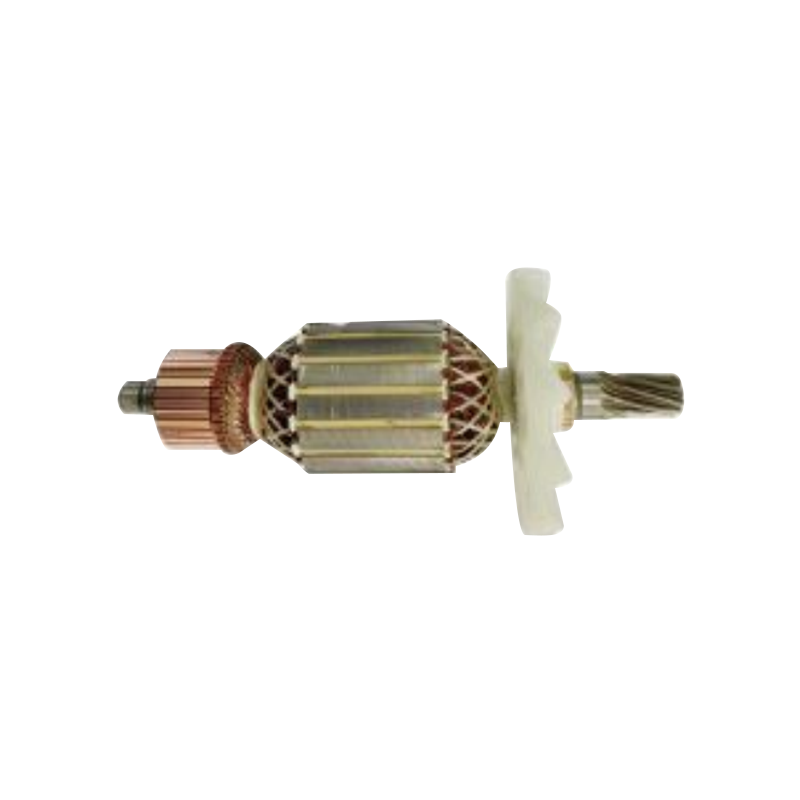
65/9 Motor Accessories φ94stator/φ53.4rotor
How the Product Supports Professional Cutting Performance
The value of the 65/9 motor accessory is most visible when the motor is used as part of a complete, well-matched cutting machine. The stator and rotor provide the electromagnetic foundation, but the final result also depends on the blade, gearbox or direct-drive structure, bearings, housing, switch, controller, cooling system, and operator technique.
When these systems are correctly coordinated, the motor can provide stable startup, useful torque, controlled speed, and repeatable performance. A reliable motor accessory reduces the risk that dimensional or material inconsistency will undermine the design of the complete tool.
For professional users, repeatability is often more important than short-term peak output. A machine that behaves consistently from one workpiece to the next is easier to operate, easier to maintain, and easier to integrate into production planning. Precision motor components support that goal by providing a stable base for the overall power system.
Supplier Selection: Why Manufacturing Depth Matters
A supplier's manufacturing depth influences every stage of the purchasing process. During product development, technical teams need to understand the customer's tool. During production, process engineers need to control materials and dimensions. During inspection, quality personnel need appropriate testing equipment. During delivery, logistics teams need reliable scheduling and packaging. During service, technical representatives need to respond clearly to problems.
A company that combines these functions can offer a more coordinated experience than a supplier focused only on product trading. The manufacturing organization associated with the 65/9 accessory has developed from a small workshop into a professional tool manufacturing company integrating research and development, production, and sales.
Its stated strengths include customization, competitive costs, reliable quality, production capacity, a strong research and development team, an in-house foundry and processing plant, advanced testing equipment, and multiple production lines. These capabilities are relevant to buyers seeking more than a one-time purchase.
Long-term cooperation can help customers stabilize specifications, improve packaging, forecast demand, and develop updated motor platforms. It also creates an opportunity to use production feedback to improve the next version of a component.
Questions and Answers
What is the 65/9 motor accessory?
It is a motor accessory configuration for cutting machines and related power-tool motors. The product information identifies a 94 mm stator and a rotor specified as 53.4 mm by 45 mm.
What is the primary application of this product?
The primary application is the motor system of cutting machines, including suitable metal cutting, cut-off, and aluminum sawing equipment. It may also be considered for other power tools after technical compatibility has been confirmed.
Can this accessory be used in every motor with a 94 mm stator?
No. The outside diameter alone does not confirm compatibility. Buyers must also check the stator inner diameter, stack length, rotor dimensions, shaft details, air gap, winding specification, bearing arrangement, electrical ratings, cooling design, and housing structure.
What does the rotor specification 53.4 mm x 45 mm mean?
It identifies the stated rotor diameter and active or stack-related length in the available product information. The customer should confirm the precise interpretation with the supplier's technical drawing before ordering, especially when the component is being used as a direct replacement.
What advantages does a precision stator and rotor provide?
Precision components can support better concentricity, a more consistent air gap, smoother rotation, lower vibration, more stable torque, and improved motor efficiency. These advantages depend on correct assembly and the performance of the complete motor system.
Is the product suitable for heavy-duty cutting?
It can be considered for demanding cutting-machine applications, but suitability must be verified against the required load, duty cycle, voltage, speed, cooling, blade size, and operating environment. The motor should not be operated beyond its rated design.
Can the supplier customize the motor accessory?
The manufacturer reports custom production capability. Possible areas for customization may include shaft dimensions, winding specifications, stack length, insulation, connectors, packaging, and other mechanical or electrical details. Custom work should be confirmed through drawings, samples, and agreed testing criteria.
What information should a buyer provide for a quotation?
A buyer should provide the existing motor model, drawings or photographs, stator and rotor dimensions, shaft measurements, voltage, current, speed, power, operating duty, application, estimated quantity, required packaging, and any inspection or certification requirements.
How can buyers verify quality before mass production?
Buyers can request technical drawings, pre-production samples, dimensional inspection reports, electrical test results, balance data, material information, and sample operating tests. A written quality agreement can define the inspection process for future batches.
How should the accessory be stored before installation?
Store it in a clean, dry location protected from moisture, dust, impact, and corrosive substances. Keep the component in its protective packaging until inspection or installation, and protect the shaft and electrical connection areas from damage.
What is the main benefit of purchasing from a specialized motor manufacturer?
A specialized manufacturer can combine product knowledge, engineering support, production capability, testing resources, and application experience. This can improve compatibility evaluation, customization, batch consistency, delivery coordination, and after-sales communication.
Does a high-quality motor accessory eliminate maintenance?
No. Maintenance remains necessary. Users should keep cooling passages clean, inspect bearings and electrical connections, use suitable blades, avoid excessive loading, and monitor unusual vibration, noise, heat, or odor.
Recommended Evaluation Checklist
Before approving the 65/9 accessory for production or repair use, the buyer should complete a structured evaluation.
First, verify the mechanical interface. Measure the stator, rotor, shaft, bearings, housing, and mounting points. Confirm that the rotor rotates freely and that the air gap is suitable.
Second, verify the electrical interface. Confirm voltage, current, speed, resistance, winding configuration, insulation, brush position, commutator details, and controller compatibility where applicable.
Third, perform a no-load test. Observe startup behavior, current, speed, noise, vibration, and temperature rise. Any unusual behavior should be investigated before load testing.
Fourth, perform a controlled load test using the intended blade and representative workpiece. Record cutting performance, motor temperature, current, vibration, and operator feedback.
Fifth, evaluate repeatability. Test more than one sample or batch when possible. Consistent results provide stronger evidence than a successful test on a single component.
Finally, confirm supply conditions. Review minimum order quantity, lead time, packaging, replacement policy, documentation, customization terms, and communication channels before placing a larger order.
Conclusion
The 65/9 motor accessories with a 94 mm stator and 53.4 mm rotor provide a practical foundation for cutting-machine and power-tool motor systems that require compact design, stable torque, efficient operation, controlled heat, and dependable service life. The product's value comes from the interaction of its dimensions, materials, electromagnetic design, balance, manufacturing precision, and compatibility with the complete motor assembly.
Compared with unspecialized or inconsistently produced alternatives, a purpose-oriented motor accessory can offer clearer dimensional control, more predictable fitting, better application support, and stronger potential for long-term supply. These benefits are especially important for professional users, original equipment manufacturers, distributors, and repair organizations.
The manufacturing strengths associated with the product include research and development, custom production, multiple production lines, integrated processing resources, testing equipment, and experience in cutting machines and power-tool motors. These capabilities can help customers move from sample evaluation to stable volume production while maintaining communication between engineering, manufacturing, inspection, and service teams.
Correct selection remains essential. Buyers should confirm every mechanical and electrical requirement rather than relying on a single dimension. With appropriate verification, installation, testing, and maintenance, the 65/9 stator and rotor configuration can support reliable performance across a broad range of cutting-machine applications.
References
1. Product specification information for the 65/9 motor accessory, including the 94 mm stator and 53.4 mm x 45 mm rotor dimensions.
2. Technical principles of electric motor stators, rotors, magnetic circuits, winding systems, and air-gap design.
3. General practices for power-tool motor testing, including dimensional inspection, insulation testing, rotor balancing, no-load operation, and temperature evaluation.
4. Industrial guidance on cutting-machine motor selection, duty cycles, thermal management, vibration control, and preventive maintenance.
5. Manufacturer information regarding cutting machines, motor accessories, custom production, research and development, testing resources, and international supply capability.
6. General engineering references for electrical steel laminations, copper windings, motor insulation, shaft machining, and rotating-component balance.