English
 عربى

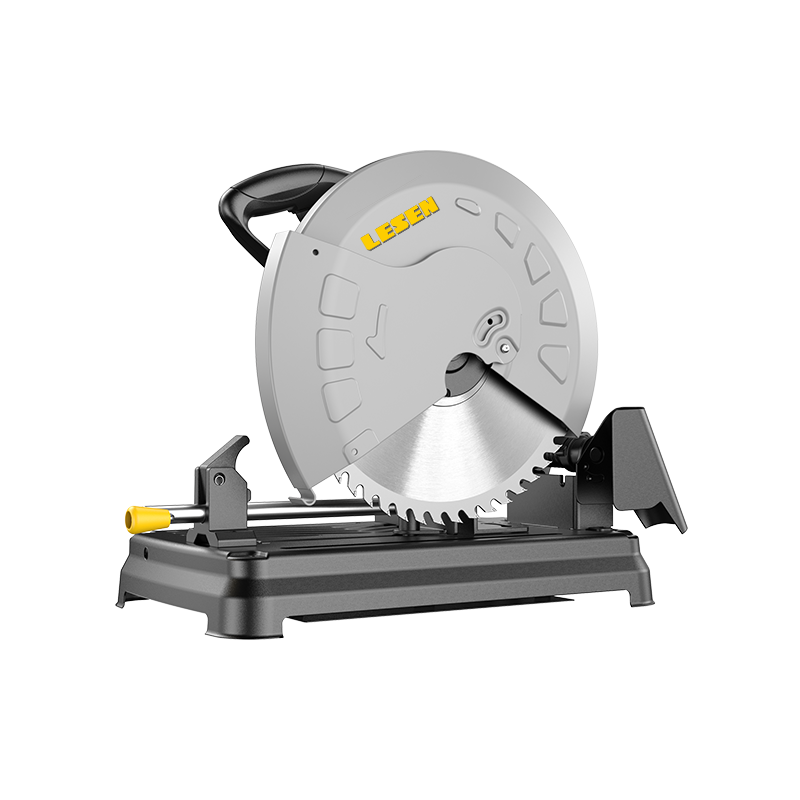
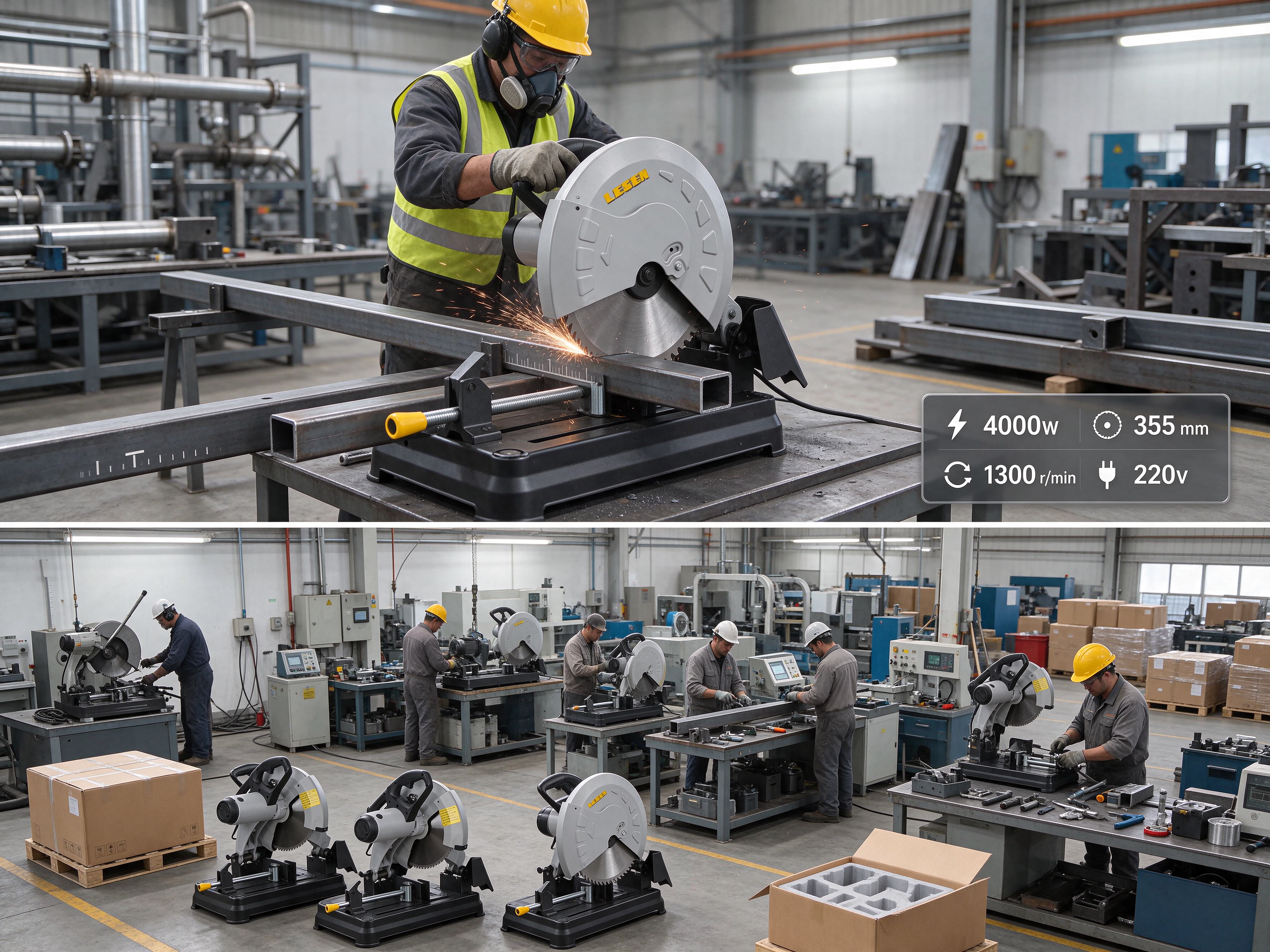
The 8355A Professional Metal Cutting Machine is designed for users who require dependable, accurate, and efficient metal-cutting performance in demanding work environments. With a rated power of 4000W, a 355mm blade, and a no-load speed of 1300 revolutions per minute, this machine is positioned as a practical solution for metal fabrication shops, industrial workshops, construction sites, maintenance departments, and professional production facilities.
Metal cutting is often a demanding operation. The machine must provide sufficient power to pass through steel, aluminum, copper, pipes, rods, profiles, and other metal materials while maintaining stability and operator control. A machine that lacks structural rigidity may produce excessive vibration, uneven cuts, accelerated blade wear, or unnecessary rework. The 8355A addresses these challenges through a reinforced frame, a powerful motor, a precise cutting mechanism, protective features, and a layout designed for efficient operation.
Beyond the product itself, the machine reflects the manufacturing capabilities of Yongkang Saima Machinery Technology Co., Ltd. The company has more than 20 years of industry experience, a 30,000-square-meter intelligent production factory, multiple production lines, in-house research and development capabilities, and facilities for casting, processing, assembly, and testing. These resources support stable product quality, production flexibility, and efficient order fulfillment for customers in different markets.
This article examines the structure, performance, applications, manufacturing strengths, purchasing considerations, and competitive advantages of the 8355A Professional Metal Cutting Machine. It also includes technical specifications, operating guidance, frequently asked questions, and reference materials for buyers evaluating professional metal-cutting equipment.
8355A Professional Metal Cutting Machine
1. Product Overview
The 8355A is a professional metal cutting machine developed for high-demand cutting tasks. Its configuration combines a high-power motor with a large 355mm cutting blade, allowing it to process a wide range of metal materials. The machine is suitable for both stationary workshop use and job-site applications where metal components must be cut accurately and efficiently.
The 4000W rated power provides the motor with a strong working capacity for demanding cutting operations. High motor power is especially valuable when cutting thicker sections, dense steel profiles, heavy pipes, or repeated batches of material. Instead of relying solely on blade pressure, the machine uses motor torque and controlled mechanical movement to maintain cutting progress.
The 355mm blade size provides a useful balance between cutting capacity and machine manageability. A blade of this size is suitable for many common metal fabrication tasks, including cutting steel bars, tubing, angle iron, channels, pipes, and other structural materials. The exact cutting capacity depends on the material type, workpiece shape, blade specification, feed technique, and operating conditions.
The 1300r/min no-load speed is engineered for controlled metal-cutting performance. Metal-cutting machines require a speed range that supports effective cutting without causing unnecessary heat, vibration, or premature wear. The 8355A’s operating speed is suitable for applications that demand stable blade rotation and consistent material engagement.
With a voltage specification of 220V at 50/60Hz, the machine can be configured for electrical systems commonly used in many industrial and commercial markets. Buyers should confirm local electrical requirements, plug standards, protection devices, and installation conditions before placing an order.
| Specification | 8355A Configuration |
| Product type | Professional metal cutting machine |
| Model | 8355A |
| Rated power | 4000W |
| Blade size | 355mm |
| No-load speed | 1300r/min |
| Voltage | 220V, 50/60Hz |
| Packaging size | 60 × 36 × 42cm |
| Quantity per carton | 1 piece |
| Gross and net weight | 21.5kg gross / 20kg net |
2. Reinforced Structural Design
A metal cutting machine must remain stable while the blade enters and exits a workpiece. Cutting force changes continuously during operation, particularly when the blade contacts corners, hollow sections, welds, or uneven surfaces. The reinforced frame of the 8355A is designed to provide a stable foundation and reduce unwanted movement during cutting.
Structural stability has a direct effect on cutting accuracy. If the base or frame flexes excessively, the blade may move away from the intended cutting line. This can lead to angled cuts, rough edges, increased burr formation, and additional finishing work. A rigid structure helps maintain alignment between the blade, workpiece, and cutting path.
The machine’s compact layout also supports practical workshop use. It is designed to occupy a manageable amount of floor or bench space while still providing sufficient operating room. This can be particularly useful in fabrication shops where several machines, storage areas, and material-handling paths must fit into a limited workspace.
A compact machine is not necessarily a lightweight or low-capacity machine. The 8355A combines a relatively manageable package with a powerful motor and a robust frame. Its gross shipping weight of approximately 21.5kg indicates that it is designed as a substantial professional tool rather than a light-duty consumer device.
The frame and working components are also intended to support repeated use. In industrial environments, the value of a machine is determined not only by its peak performance but also by its ability to provide consistent results throughout a working day. A strong structural design helps reduce the impact of vibration on the motor, blade, moving joints, and operator.
Reduced Vibration and Better Control
Vibration is one of the most common causes of poor cutting results and operator fatigue. Excessive vibration can make it difficult to follow the cutting line, increase noise, loosen fasteners, and accelerate wear on mechanical components. The reinforced structure of the 8355A is intended to provide a more controlled cutting motion.
Lower vibration also improves the working environment. When the machine remains stable, the operator can apply pressure more consistently and focus on workpiece positioning. This can contribute to cleaner cuts, improved productivity, and more predictable blade service life.
Practical Space Utilization
Workshop space has a measurable effect on production efficiency. A machine that is difficult to position may create unnecessary material movement or force operators to work in awkward conditions. The 8355A’s compact arrangement allows users to organize the machine alongside raw-material racks, welding equipment, drilling machines, grinders, and assembly stations.
For construction and maintenance teams, a practical layout is also valuable during relocation. The machine can be integrated into mobile work areas where steel sections, pipes, and repair components need to be prepared close to the installation site.
3. Powerful Motor Performance
The motor is one of the most important components of any metal-cutting machine. Cutting through metal requires more than high rotational speed. The motor must deliver sufficient torque under load, maintain stable operation, and withstand repeated starting and cutting cycles.
The 8355A uses a 4000W motor configuration intended for demanding professional applications. Its high torque performance supports cutting operations involving thick or dense metal materials. When combined with an appropriate blade and correct feed pressure, the motor can maintain effective cutting progress without requiring excessive force from the operator.
High motor power can improve productivity in two ways. First, it supports efficient cutting of individual workpieces. Second, it allows the machine to handle repeated operations with less risk of performance decline caused by excessive loading. This makes the machine suitable for workshops that process multiple parts during a production shift.
Motor power should always be matched with proper operating technique. Excessive downward pressure, an unsuitable blade, an improperly secured workpiece, or a damaged electrical supply can reduce performance regardless of the rated power. The best results are achieved when the operator allows the blade to cut at a controlled rate without forcing it through the material.
Balanced Power Consumption
Professional users often need to balance cutting performance with energy management. The 8355A is designed to deliver a high working capacity while maintaining a practical power profile for a 220V electrical system. Its energy efficiency depends on material thickness, duty cycle, blade condition, operator technique, and the number of cuts completed per hour.
Efficient cutting reduces the time required for each part. Shorter operating cycles can improve overall energy use per workpiece, even when the machine has a high rated power. Regular maintenance, correct blade selection, and proper workpiece support also help prevent energy loss caused by unnecessary friction or repeated failed cuts.
Overload and Thermal Considerations
Metal cutting generates heat through friction and material removal. A machine used continuously under excessive load may experience motor heating or mechanical stress. The 8355A includes an overload protection concept intended to help prevent overheating or mechanical overload during operation.
Protection features should not be treated as a substitute for correct operation. Users should avoid forcing the blade, cutting materials outside the recommended application range, operating with blocked ventilation, or using damaged accessories. If the motor becomes unusually hot, produces an abnormal smell, loses power, or trips protection repeatedly, operation should be stopped and the machine should be inspected by a qualified technician.
4. Precision Cutting Mechanism
Precision is essential in metal fabrication. A cut that is slightly inaccurate may create gaps during welding, require extra grinding, or cause the finished component to fall outside design tolerances. The 8355A is designed to support accurate cuts through measurement guides, blade alignment, stable clamping, and controlled movement.
Measurement guides help the operator establish repeatable cutting dimensions. When the same length must be produced many times, a clear measurement reference can improve consistency between workpieces. This is useful in the fabrication of frames, supports, railings, brackets, machine parts, and structural assemblies.
Blade alignment is equally important. If the blade is not correctly aligned with the cutting path, the machine may produce angled surfaces or uneven edges. The 8355A’s fine alignment design supports a more direct relationship between the marked line and the finished cut.
Clean cutting is influenced by several factors, including the material grade, blade tooth design, blade condition, cutting speed, workpiece stability, and feed pressure. The machine provides the mechanical foundation for precision, but the operator must still select the proper accessory and use a suitable technique.
Reducing Burrs and Secondary Processing
Burrs are unwanted sharp edges or raised material remaining after cutting. They can create safety risks, interfere with assembly, and increase the time required for grinding or deburring. The 8355A is designed to produce clean cuts with reduced burr formation when operated with a suitable blade and correct settings.
Reducing secondary processing has a direct effect on production cost. Every additional grinding or finishing step consumes labor, abrasive materials, electricity, and time. In high-volume workshops, even a small reduction in finishing work can produce meaningful operational savings.
Clean cuts also support better welding and assembly. A square, consistent edge can make it easier to position parts, maintain joint dimensions, and achieve a uniform finished appearance. For repair work, accurate cuts help ensure that replacement sections fit properly without extensive modification.
Adjustable Cutting Settings
Different metals and workpiece shapes require different cutting approaches. The 8355A provides adjustable settings intended to support different operating requirements. Depending on the specific configuration, users may adjust cutting speed, cutting angle, workpiece position, or related operating parameters.
Adjustability gives the machine greater flexibility than a tool designed for only one fixed type of cut. It can be used for straight cuts, angled cuts, preparation of structural components, and customized fabrication tasks. Operators should consult the machine instructions and use appropriate fixtures when making angled or repetitive cuts.
5. Compatibility with Different Metals
The 8355A is suitable for cutting various common metals, including steel, aluminum, and copper, when the correct blade and operating method are used. These materials have different characteristics and should not be treated identically.
Steel generally requires a durable blade and controlled cutting pressure. Stainless steel may generate more heat and require a blade designed for its hardness and work-hardening behavior. Carbon steel profiles, rods, pipes, and plates can vary significantly in thickness and shape, so the machine should be configured according to the specific workpiece.
Aluminum is softer than steel but can create issues if the blade or cutting technique is unsuitable. Material can accumulate on the blade, and excessive pressure may reduce cut quality. A blade intended for aluminum and appropriate workpiece support can help produce better results.
Copper is relatively soft and may deform if it is not securely clamped. Careful positioning and a suitable cutting accessory are important when working with copper bars, tubes, or other sections.
Compatibility does not mean that every material can be cut under identical conditions. Users should verify blade suitability, material thickness, maximum cutting dimensions, and safety instructions before processing unfamiliar materials. The machine should not be used for applications beyond its intended design.
6. Safety Features and Operator Protection
Safety is a central consideration in metal cutting. The operation involves a rotating blade, sharp workpiece edges, sparks, metal particles, noise, and potential heat. The 8355A includes protective covers and shields intended to reduce exposure to moving and cutting components.
Protective covers help contain some sparks and fragments generated during cutting. They also provide a physical barrier between the operator and the rotating blade. Covers must remain correctly installed and should never be removed or modified during normal use.
The machine’s overload protection is intended to help reduce the risk associated with excessive motor loading. It can support safer operation by responding to conditions that may cause overheating or mechanical strain. However, operators must still follow correct working procedures and stop the machine if abnormal conditions develop.
Personal protective equipment remains essential. Operators should use suitable eye or face protection, hearing protection, work gloves appropriate for material handling, protective clothing, and safety footwear. Loose clothing, jewelry, and unsecured hair should be kept away from moving components.
The workpiece must be securely supported and clamped before cutting. Holding material by hand is unsafe, especially when cutting larger sections or short pieces. The operator should keep hands away from the blade path and should wait until the blade has stopped completely before removing cut material or making adjustments.
Safe Workspace Preparation
The machine should be placed on a stable, level surface with adequate clearance around the cutting area. The workspace should be free of unnecessary combustible materials, oil spills, loose tools, and obstructions. Good lighting allows operators to see the measurement marks, cutting line, workpiece position, and machine controls clearly.
Electrical connections should be suitable for the rated voltage and power requirements. Extension cords, plugs, switches, and protective devices must be correctly rated. Electrical installation and repairs should be performed by qualified personnel.
Safe Operating Sequence
A safe operating sequence begins with an inspection of the machine, blade, protective cover, power cord, fasteners, and work area. The blade should be appropriate for the material and free from visible damage. The workpiece should be measured, marked, supported, and secured.
The operator should start the machine without allowing the blade to contact the material. After the blade reaches operating speed, the cutting head can be lowered gradually and evenly. Excessive force should be avoided. After completing the cut, the operator should raise the cutting head, release the control, and wait for the blade to stop before handling the workpiece.
7. Ease of Maintenance
Maintenance influences the service life, accuracy, and safety of a metal cutting machine. The 8355A uses durable components and an accessible design to support routine inspection, adjustment, and replacement.
Accessible components can reduce maintenance time. When key parts can be reached without unnecessary disassembly, technicians can inspect fasteners, replace worn accessories, clean debris, and make adjustments more efficiently. This is especially valuable for production facilities where equipment downtime directly affects output.
Routine maintenance should include cleaning metal dust and chips from the machine, checking the blade, inspecting protective covers, confirming that fasteners remain tight, and examining the electrical cord for damage. Moving joints and pivots should be checked according to the manufacturer’s maintenance recommendations.
Blade maintenance is particularly important. A dull, damaged, or incorrectly installed blade can increase cutting force and motor load. It may also cause poor surface quality, overheating, vibration, or unexpected movement. Blades should be replaced when they show excessive wear, cracks, missing teeth, deformation, or reduced cutting performance.
Before any maintenance work, the machine must be switched off, disconnected from the power supply, and allowed to cool. Maintenance personnel should use appropriate protective equipment and follow the relevant service instructions.
Durability of Components
The machine’s all-metal construction is intended to provide resistance to wear and the demands of professional use. High-grade structural materials can help the machine withstand repeated clamping, cutting, movement, and transportation.
Corrosion resistance is also important in workshops where humidity, coolant, dust, or metal residue may be present. Protective coatings help guard exposed surfaces against rust and corrosion. Nevertheless, the machine should be stored in a dry environment and cleaned regularly to prevent contamination from becoming a long-term problem.
8. Advantages Compared with General-Purpose Competitors
The 8355A competes most directly with general-purpose metal-cutting machines used in workshops, construction, maintenance, and light industrial production. Its advantages are based on the combination of power, blade size, structural stability, adjustability, accessibility, and professional manufacturing support.
Higher Working Capacity
With a rated power of 4000W, the 8355A offers a strong capacity for demanding cutting tasks. Many lower-powered machines are suitable for occasional cutting of thin or small materials but may struggle when used continuously or when processing thicker sections. The higher-power configuration gives professional users more operating headroom.
Power alone does not determine cutting quality, but it provides a useful foundation for productivity. When a machine can maintain cutting progress under load, operators can complete more work in less time and reduce delays caused by repeated pauses or incomplete cuts.
Large 355mm Blade Format
The 355mm blade supports a broad range of fabrication work. A larger blade format can be advantageous when users need to cut larger profiles, pipes, rods, and structural sections. Compared with smaller machines, the 8355A may reduce the need to divide a workpiece into multiple stages or use different equipment for larger materials.
Blade size must always be considered together with actual cutting capacity and workpiece geometry. Buyers should confirm the manufacturer’s detailed cutting limits for their intended materials before purchase.
Professional Stability
The reinforced frame and compact layout distinguish the machine from less rigid general-purpose tools. A stable platform can improve repeatability, reduce vibration, and provide a more comfortable operating experience during extended use.
Stability is especially important for businesses that produce batches of similar parts. A machine that maintains alignment from one workpiece to the next can reduce dimensional variation and improve the consistency of downstream welding or assembly.
Maintenance-Friendly Design
Some machines are difficult to service because critical components are hidden behind complex structures. The 8355A emphasizes accessibility, allowing inspection and replacement work to be completed more efficiently. This can help reduce downtime and simplify ownership for workshops without a large maintenance department.
Manufacturer Support and Customization
The manufacturer’s research and development capabilities, production lines, foundry, processing plant, and testing equipment provide advantages beyond the machine’s standard configuration. Buyers seeking customized specifications, packaging, voltage arrangements, product labeling, or production quantities can discuss their requirements directly with an experienced factory.
Factory-based communication can shorten the path between technical feedback and product improvement. It also gives importers, distributors, and professional users access to a broader product range, including metal cutting machines, cut-off machines, aluminum sawing machines, angle grinders, wall planing machines, motor accessories, and circular saw blades.
9. Applications in Different Industries
Industrial Manufacturing
In industrial manufacturing, the 8355A can be used to prepare metal components for automotive, aerospace-related support work, machinery production, equipment frames, and general fabrication. It is suitable for operations where straight, repeatable cuts are needed before drilling, welding, machining, or assembly.
Manufacturing users may benefit from establishing standard operating procedures for material selection, blade replacement, workpiece positioning, and quality inspection. Measurement guides can support repeat production, while the reinforced frame can help maintain stable cutting conditions during repeated cycles.
Metal Fabrication Shops
Fabrication shops process a wide variety of profiles and materials. One order may involve steel tubes, another may require aluminum sections, and a third may involve copper or specialized components. The 8355A’s broad material compatibility and adjustable operation make it suitable for this varied environment.
The machine can support the production of gates, railings, brackets, frames, supports, furniture components, artistic metalwork, and custom engineering parts. Its ability to make straight and angled cuts can reduce the need for separate equipment in smaller workshops.
Construction Sites
Construction teams often need to cut structural metal pieces, pipes, rods, channels, and other components close to the installation area. A professional cutting machine can reduce the time required to transport materials back and forth between the construction site and an off-site workshop.
Because construction environments can be exposed to dust, moisture, uneven surfaces, and changing weather conditions, the machine should be placed securely and protected from unsuitable conditions. Operators must pay particular attention to electrical safety, spark control, stable support, and safe material handling.
Maintenance and Repair Departments
Maintenance teams frequently need to modify or repair metal structures, machine guards, frames, pipes, brackets, and replacement components. The 8355A can provide a reliable in-house cutting solution, allowing repair personnel to prepare parts quickly instead of waiting for an outside supplier.
Fast access to cutting equipment can shorten equipment downtime. It may also enable maintenance teams to make temporary or permanent replacement parts during planned shutdowns and emergency repair work.
Workshops and Educational Laboratories
Technical schools, training centers, and educational laboratories can use the machine to demonstrate material preparation, measurement, cutting safety, and fabrication techniques. Its professional configuration gives learners exposure to equipment similar to that used in industrial environments.
Educational use must be supervised by trained instructors. Students should receive instruction on blade hazards, protective equipment, workpiece clamping, electrical safety, and emergency procedures before operating the machine.
10. Manufacturing Strengths Behind the Product
The performance of a machine depends not only on its design but also on how consistently it is manufactured. Yongkang Saima Machinery Technology Co., Ltd. has developed its capabilities through long-term specialization in power tool motors and mobile cutting equipment.
The company was established in 2005 and operates in Yongkang, Zhejiang, a region recognized for hardware manufacturing. Its development has progressed from product imitation toward independent innovation, expanded production, and brand development. This background gives the company experience in both the technical and commercial aspects of power tool manufacturing.
Research and Development
Research and development is important for improving motor performance, structural strength, cutting accuracy, thermal management, safety, and usability. A dedicated R&D team can evaluate customer feedback, identify recurring application problems, and develop practical solutions for different markets.
For professional buyers, R&D capability is also valuable when a standard product does not fully match a specific application. The factory can discuss customized requirements such as power configuration, operating voltage, packaging, accessories, product appearance, or other production details, subject to technical evaluation and order quantity.
Integrated Production Resources
The company reports its own foundry and processing plant, advanced testing equipment, six main production lines, and comprehensive product lines. Integrated resources can improve coordination between component production, machining, motor assembly, final assembly, and quality inspection.
In-house or closely managed production processes may reduce dependence on multiple external suppliers. This can support more consistent component matching, better control over production schedules, and faster response when technical adjustments are required.
Testing and Quality Control
Testing is essential for a product that combines electrical, mechanical, and cutting functions. A professional inspection process may include checks of motor operation, electrical safety, blade rotation, structural alignment, protective covers, fasteners, packaging, and general functionality.
Testing requirements can vary according to market regulations, customer specifications, and product configuration. Importers should confirm the available inspection documents, certifications, test reports, and compliance requirements for their target market before finalizing an order.
Production Capacity and Delivery
The company’s production scale supports orders for distributors, wholesalers, contractors, and industrial users. Multiple production lines and a 30,000-square-meter intelligent production factory provide a foundation for volume production and scheduled delivery.
Production capacity is especially important for distributors that need consistent replenishment. A supplier may offer an attractive sample but fail to maintain supply during peak demand. A manufacturer with established production systems is better positioned to support repeat orders, provided that purchase forecasts and specifications are communicated clearly.
International Service
The company reports trade coverage in more than 35 countries and regions, along with 24-hour service response. International experience can help the supplier understand packaging, documentation, voltage, labeling, communication, and logistics requirements in different markets.
Buyers should still provide complete information at the quotation stage. Important details include destination country, required voltage and frequency, plug type, branding needs, carton markings, quantity, target application, expected blade type, and applicable regulatory requirements.
11. Purchasing and Configuration Considerations
Before purchasing the 8355A, buyers should define the materials, dimensions, cutting frequency, work environment, and expected production volume. The machine is designed for professional metal cutting, but the best configuration depends on the user’s actual application.
Material thickness is one of the most important considerations. Buyers should provide details about the maximum diameter of round stock, dimensions of rectangular profiles, wall thickness of pipes, and size of solid bars. Different cross-sectional shapes place different loads on the blade and motor.
Blade selection should be discussed with the supplier. A blade suitable for mild steel may not be the best choice for stainless steel, aluminum, copper, or specialized alloys. Tooth form, abrasive composition, diameter, bore size, and operating speed should be compatible with the machine and the material.
Electrical requirements should also be confirmed. The listed configuration is 220V at 50/60Hz, but local standards may require a specific plug, cable, switch, circuit protection system, or wiring arrangement. Electrical modifications should be handled by qualified professionals.
Packaging and logistics are relevant for wholesale customers. The listed box size is 60 × 36 × 42cm, with one machine per carton and a gross weight of approximately 21.5kg. Buyers should confirm whether the packaging is suitable for sea freight, air freight, palletization, container loading, and local distribution.
For private-label or distributor orders, customers may ask about product labels, user manuals, carton artwork, color requirements, accessory combinations, and spare parts. Such requirements should be agreed in writing before production begins.
12. Recommended Operating Practices
Correct operation helps the machine deliver its intended performance and extends the life of the motor, blade, frame, and moving components. Operators should read the supplied instructions before use and receive practical training when the equipment is new to the workplace.
The workpiece should be measured accurately and marked clearly. It should be positioned so that the cut does not cause the remaining material to pinch the blade. Long sections should be supported at both sides of the cutting area to prevent movement or sudden bending.
The clamp or holding mechanism should secure the material firmly without deforming it. A loose workpiece can vibrate, twist, or move into the blade unexpectedly. A workpiece that is clamped unevenly may produce an angled cut or place excessive side pressure on the blade.
The blade should be allowed to reach operating speed before entering the material. The cutting head should be lowered smoothly, without sudden impact. If the blade stalls, binds, or produces unusual vibration, the operator should stop the machine and identify the cause before continuing.
At the end of a cut, the operator should avoid twisting the blade in the material. The cutting head should be raised in a controlled manner, and the blade should come to a complete stop before the cut piece is removed.
Good housekeeping is part of machine operation. Metal chips, dust, and offcuts should be removed regularly. The floor around the machine should remain clear, and hot cut pieces should be placed in a designated area where they cannot cause burns or ignite combustible materials.
13. Maintenance Schedule
| Maintenance interval | Recommended checks |
| Before each use | Inspect the blade, protective cover, power cord, fasteners, workpiece clamp, and general machine condition. |
| During operation | Monitor vibration, noise, motor temperature, cutting quality, and any unusual smell or loss of power. |
| After each use | Switch off and disconnect the machine, clean chips and dust, and store accessories safely. |
| Regularly | Check blade wear, moving joints, alignment, fastener tightness, and corrosion protection. |
| When required | Replace damaged blades, worn components, damaged cords, or defective protective parts using suitable replacements. |
The maintenance schedule should be adapted to the actual duty cycle. A machine used for several hours every day requires more frequent inspection than one used occasionally. Harsh environments, abrasive materials, and transport between job sites may also increase maintenance requirements.
14. Total Value for Professional Users
The value of a metal cutting machine should be evaluated over its working life rather than by purchase price alone. A lower-priced machine may become expensive if it produces inconsistent cuts, requires frequent replacement, causes extended downtime, or limits the types of materials a workshop can process.
The 8355A offers value through its combination of cutting capacity, structural durability, operating flexibility, maintenance accessibility, and manufacturing support. Its 4000W motor and 355mm blade support a broad range of professional applications. Its reinforced frame helps improve stability, while its safety features and accessible components support practical ownership.
Productivity is another important part of total value. When a machine can complete cuts efficiently and consistently, operators spend less time correcting errors, grinding burrs, repositioning material, or waiting for outside processing. This can improve delivery performance and increase the number of orders a workshop can accept.
For distributors and importers, supplier reliability is equally important. Stable production capacity, customization support, technical communication, and international service can reduce purchasing risk. These factors help buyers build a more dependable product portfolio instead of relying on a machine with limited factory support.
15. Frequently Asked Questions
Q1: What is the primary use of the 8355A Professional Metal Cutting Machine?
The machine is designed for professional cutting of common metal materials such as steel, aluminum, and copper. It can be used for pipes, rods, profiles, structural sections, fabrication components, repair parts, and other suitable workpieces.
Q2: What is the rated power of the machine?
The listed rated power is 4000W. This high-power configuration supports demanding cutting operations and repeated professional use when the machine is operated with a suitable blade and correct technique.
Q3: What blade size does the 8355A use?
The listed blade size is 355mm. Buyers should confirm the correct blade bore, accessory specification, material compatibility, and maximum cutting dimensions before purchasing replacement blades.
Q4: What is the no-load speed?
The no-load speed is listed as 1300r/min. Actual cutting performance depends on the material, blade, cutting pressure, workpiece shape, and operating conditions.
Q5: Can the machine cut stainless steel?
The machine is designed for a range of metals, but stainless steel requires a blade and cutting method suitable for its hardness and heat characteristics. Buyers should confirm the recommended blade and operating limits with the supplier before processing stainless steel regularly.
Q6: Is the machine suitable for construction sites?
Yes. Its professional design and manageable package make it suitable for construction and maintenance work, provided that it is installed on a stable surface and protected from unsafe electrical, environmental, and material-handling conditions.
Q7: How can cutting accuracy be improved?
Accuracy can be improved by using a sharp and suitable blade, securing the workpiece firmly, checking blade alignment, using the measurement guide, supporting long materials, and applying steady cutting pressure without forcing the blade.
Q8: What safety equipment should operators use?
Operators should use eye or face protection, hearing protection, suitable work gloves for handling material, protective clothing, and safety footwear. Loose clothing and jewelry should be kept away from moving parts.
Q9: How often should the blade be replaced?
Replacement frequency depends on material type, cutting volume, blade quality, operating technique, and signs of wear. The blade should be replaced if it is cracked, damaged, excessively worn, deformed, or no longer produces acceptable cuts.
Q10: Does the manufacturer support customized orders?
The company reports custom production capabilities and comprehensive manufacturing resources. Customers should discuss requirements such as voltage, packaging, labeling, accessories, appearance, and production quantity with the factory before placing an order.
Q11: What are the packaging dimensions?
The listed box size is 60 × 36 × 42cm. The standard packing quantity is one piece per carton, with a listed gross and net weight of approximately 21.5kg and 20kg respectively.
Q12: What should buyers confirm before importing the machine?
Buyers should confirm voltage and frequency, plug type, applicable certifications, blade specifications, packaging requirements, user manuals, spare parts, labeling, shipping terms, warranty conditions, and the cutting capacity required for their target materials.
16. Conclusion
The 8355A Professional Metal Cutting Machine is a capable solution for professional users who need power, stability, precision, and practical maintenance. Its 4000W motor, 355mm blade, reinforced frame, protective covers, measurement guidance, and adjustable operation provide a strong foundation for metal fabrication, construction, repair, manufacturing, and educational applications.
Compared with general-purpose competitors, the machine offers advantages through its higher working capacity, larger blade format, robust construction, reduced-vibration design, accessible components, and compatibility with a broad range of professional tasks. Its value is further strengthened by the manufacturer’s research and development capabilities, integrated production resources, testing facilities, multiple production lines, customization support, and international service experience.
Successful use depends on selecting the correct blade, securing the workpiece, following safe operating procedures, maintaining the machine regularly, and confirming technical requirements before purchase. When these conditions are met, the 8355A can help workshops improve cutting consistency, reduce secondary processing, and increase production efficiency.
For wholesalers, distributors, contractors, and industrial buyers, the machine represents more than a single piece of equipment. It is part of a broader manufacturing and supply capability supported by long-term experience in power tool motors and mobile cutting machinery. This combination of product performance and factory strength makes the 8355A a practical option for customers seeking dependable metal-cutting equipment for professional use.
References
1. Product technical information for the 8355A Professional Metal Cutting Machine, including model, power, blade size, speed, voltage, packaging, and weight specifications.
2. Manufacturer-provided product description covering structural design, cutting performance, maintenance, safety features, applications, and operating characteristics.
3. Manufacturer company information regarding research and development, production lines, intelligent factory capacity, customization, testing resources, and international market service.
4. General professional workshop practices for metal cutting, workpiece clamping, blade selection, machine maintenance, and operator protection.
5. General industrial guidance concerning electrical safety, rotating equipment protection, personal protective equipment, and safe handling of hot metal components.