English
 عربى
عربى

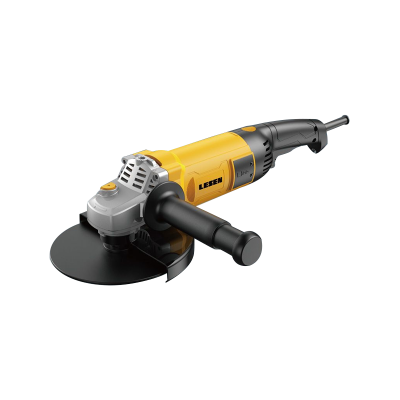
In today's manufacturing environment, flexibility often matters as much as scale. An Angle Grinder Factory is no longer just a place where tools are assembled in large quantities. It is gradually becoming a space where customization, material selection, and user-specific design play a growing role. This shift reflects changes in customer expectations across construction, metalworking, and home improvement sectors.
From Standard Output to Flexible Production
Traditionally, an Angle Grinder Factory focused on producing uniform models in large batches. While this approach still exists, more factories are adjusting their production lines to handle varied requirements. Clients may request different motor capacities, housing materials, or ergonomic designs depending on their market.
This move toward flexibility does not necessarily mean slower production. Instead, it requires smarter planning, modular components, and adaptable assembly systems. By reorganizing workflows, an Angle Grinder Factory can switch between product types without major downtime.
Material Choices and Their Impact
Another area of evolution lies in material selection. The outer casing, internal gears, and even the cooling system can vary depending on usage conditions. For example, grinders intended for heavy industrial use may require reinforced housings, while lighter models for household use may focus more on comfort and reduced weight.
An Angle Grinder Factory often works closely with suppliers to ensure consistent material quality. Small adjustments in material composition can influence durability, heat resistance, and overall performance. These decisions are rarely random—they are guided by testing and long-term usage data.
Customization as a Competitive Factor
Customization is becoming a defining feature for many manufacturers. Instead of offering only a fixed catalog, an Angle Grinder Factory may provide options such as:
- Variable speed configurations
- Different handle designs
- Region-specific voltage compatibility
- Branding and packaging adjustments
These options allow distributors and retailers to better align products with their target customers. For the factory, it also opens opportunities to build longer-term partnerships rather than one-time transactions.
Balancing Cost and Efficiency
Flexibility and customization come with challenges, especially when it comes to cost control. Producing many variations can increase complexity in inventory and logistics. To address this, an Angle Grinder Factory often relies on standardized core components combined with interchangeable parts.
This approach helps maintain a balance. Core elements like motors and internal mechanisms remain consistent, while external features can be modified more easily. As a result, production stays efficient without sacrificing the ability to meet diverse demands.
The Role of Skilled Workers
Even with automation, human expertise remains essential. Workers in an Angle Grinder Factory are responsible for quality checks, assembly precision, and troubleshooting unexpected issues. Their experience helps ensure that each unit meets functional requirements before leaving the production line.
Training also plays a key role. As product variations increase, workers must understand multiple configurations and assembly processes. This makes ongoing training programs an important part of factory operations.
The future of manufacturing is not only about producing more but also about producing smarter. An Angle Grinder Factory that embraces flexibility, thoughtful material use, and customization is better positioned to respond to changing market conditions.
Rather than relying solely on scale, these factories are building systems that can adjust quickly while maintaining consistency. This shift may not always be visible from the outside, but it plays a significant role in how tools are designed, produced, and delivered today.