English
 عربى
عربى

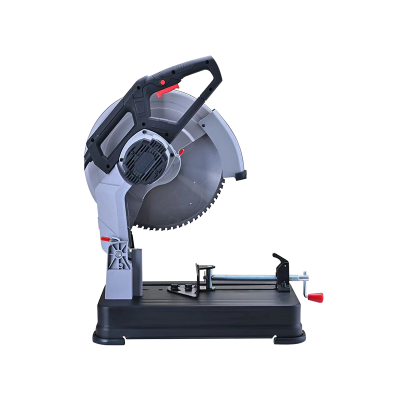
In today's manufacturing landscape, flexibility matters just as much as precision. An Aluminum Cutting Saw Factory is no longer just a place where metal is cut into standard shapes. Instead, it has become a space where customization, process control, and consistency come together to support a wide range of industries.
Understanding Daily Operations
At the core of an Aluminum Cutting Saw Factory, daily work revolves around handling different aluminum profiles. These may include tubes, bars, or complex extrusions used in construction, transportation, or home products.
Operators begin by reviewing cutting requirements—dimensions, tolerances, and surface conditions. From there, machines are adjusted to match the material type. Aluminum, while softer than steel, still requires careful handling to avoid burrs or deformation.
Unlike repetitive mass production, many factories now deal with mixed orders. This means switching between tasks frequently. As a result, workflow planning becomes just as important as the machines themselves.
Equipment and Process Flow
A typical Aluminum Cutting Saw Factory uses a combination of automatic and semi-automatic saws. These machines are designed to deliver stable cutting performance over long periods.
Key Process Steps:
- Material feeding and alignment
- Blade selection based on thickness
- Controlled cutting speed
- Cooling or lubrication if required
- Post-cut inspection
Each step influences the final result. For example, improper alignment can lead to uneven cuts, while incorrect blade speed may affect the surface finish.
Factories often introduce simple digital systems to track production data. These systems help reduce errors and improve coordination between teams.
Custom Orders and Flexibility
One notable trend is the increase in custom orders. Clients are requesting specific lengths, angles, or bundled components. This pushes an Aluminum Cutting Saw Factory to adjust quickly without slowing down overall production.
To handle this, factories often:
- Prepare modular fixtures
- Keep multiple blade types ready
- Train operators for quick changeovers
This approach allows them to manage both large and small orders within the same production line.
Quality Control in Practice
Quality control is not just a final inspection step. In a well-managed Aluminum Cutting Saw Factory, it is integrated into each stage of production.
Operators may check:
- Cut accuracy
- Edge smoothness
- Dimensional consistency
Instead of relying only on end-of-line checks, many factories encourage in-process verification. This reduces material waste and avoids rework.
Challenges Faced by Factories
Despite improvements, there are still practical challenges. Aluminum materials vary in hardness and shape, which can affect cutting behavior. In addition, fluctuating order volumes require flexible scheduling.
Another issue is tool wear. Saw blades need regular maintenance or replacement to keep results consistent. Without proper monitoring, performance may decline over time.
To address these challenges, an Aluminum Cutting Saw Factory often builds routines around maintenance and operator training rather than relying solely on equipment upgrades.
As industries continue to diversify, the role of an Aluminum Cutting Saw Factory will keep evolving. Instead of focusing only on output, factories are gradually paying more attention to adaptability and steady performance.
Small improvements—such as better workflow design or clearer communication between teams—can make a noticeable difference. Over time, these changes help factories stay reliable partners in supply chains that demand both precision and flexibility.