English
 عربى

In modern metalworking, cutting quality directly affects productivity, material utilization, assembly accuracy, and finishing costs. A saw blade that produces rough edges, excessive heat, or inconsistent dimensions can create problems throughout the manufacturing process. For this reason, professional workshops and industrial production lines require cutting tools that combine precision, durability, speed, and dependable operating performance.
The 355*72T Edgy Cold Cutter is designed to meet these requirements. With a 355 mm diameter and 72 precision-engineered teeth, this circular saw blade is intended for accurate cutting of metal materials, including steel, stainless steel, aluminum, and other non-ferrous alloys when used with a compatible cold-cutting machine. Its tungsten carbide-tipped construction, high tooth count, and cutting geometry are engineered to support smooth cuts, reduced burr formation, efficient chip removal, and controlled heat generation.
Beyond the blade itself, product performance depends on manufacturing consistency. Tooth geometry, carbide quality, body flatness, tension control, brazing strength, grinding accuracy, and final inspection all influence the result achieved at the workpiece. Yongkang Saima Machinery Technology Co., Ltd., operating under the LESEN brand, combines research and development, production, testing, and sales to manufacture cutting machines, tool motors, accessories, and circular saw blades for customers in multiple international markets.
This article examines the design, performance, applications, manufacturing advantages, purchasing considerations, and maintenance requirements of the 355*72T Edgy Cold Cutter. It also explains why a professionally manufactured TCT blade can provide advantages over general-purpose or lower-quality alternatives.
Understanding the 355*72T Edgy Cold Cutter
The product name identifies the blade’s primary specifications. The 355 designation refers to the nominal outside diameter of the blade, while 72T indicates that the blade has 72 teeth. The term “cold cutter” describes a cutting approach in which the workpiece is cut with controlled heat generation compared with abrasive cutting methods. The blade is intended for use on suitable metal-cutting equipment rather than on an incompatible woodworking saw or general-purpose hand tool.
A 355 mm blade with 72 teeth offers a relatively fine tooth arrangement for applications where cut quality and dimensional control are important. More teeth generally allow a greater number of cutting engagements during each revolution. When the feed rate, spindle speed, material type, and machine capacity are correctly matched, this configuration can produce a smooth and accurate cut with reduced burr formation.
The 355*72T configuration is especially suitable for users who need a balance between cutting productivity and finish quality. A blade with fewer teeth may remove material aggressively but can leave a coarser finish. A blade with too many teeth for the application may overload the cutting edges, reduce chip space, or increase feeding resistance. The 72-tooth design is therefore intended for controlled industrial cutting where the quality of the finished edge is a major consideration.
As with every circular saw blade, actual results depend on the material thickness, profile shape, hardness, machine power, clamping method, spindle speed, feed speed, coolant or lubrication system, and operator technique. The product should always be installed and operated according to the machine manufacturer’s specifications and the recommended parameters for the material being cut.
Core Advantages of the 355*72T Configuration
High Tooth Count for Smooth Cutting
The 72-tooth arrangement is one of the blade’s most important performance features. Each tooth removes a comparatively controlled amount of material, helping create a more uniform cutting action. This is particularly valuable when the final edge must be suitable for welding, assembly, coating, bending, or further fabrication.
A smoother cut can reduce the need for deburring and secondary grinding. In a high-volume production environment, even a small reduction in finishing time can create meaningful savings. Less manual finishing also improves process consistency because the result is less dependent on individual operator skill.
The tooth count is also beneficial when cutting profiles, pipes, bars, and sheet-related components where excessive vibration or rough engagement could damage the workpiece. Correct clamping remains essential, but the controlled tooth engagement of a fine-tooth TCT blade can support a cleaner overall cutting process.
Tungsten Carbide-Tipped Cutting Edges
The cutting teeth are designed with tungsten carbide-tipped material. Carbide is harder and more wear-resistant than ordinary high-speed steel when used under suitable cutting conditions. It can maintain a sharp cutting edge for longer periods, particularly when cutting production materials such as mild steel, stainless steel, aluminum, and selected alloys.
The use of carbide tips provides several potential benefits. It can improve edge retention, support consistent cutting performance during longer production runs, and reduce the frequency of blade replacement. A longer usable life also lowers the amount of downtime associated with tool changes.
Carbide performance depends on more than hardness alone. The grade of carbide, tip dimensions, brazing quality, tooth geometry, grinding accuracy, and operating parameters all influence service life. A well-made carbide-tipped blade must provide a secure bond between the tip and the blade body while maintaining consistent tooth positioning.
Controlled Heat Generation
Cold-cutting blades are valued for their ability to limit heat-related problems compared with abrasive cutting processes. Excessive heat can discolor the workpiece, distort thin sections, reduce blade sharpness, damage protective coatings, and create unsafe operating conditions. The 355*72T Edgy Cold Cutter is designed to support efficient chip formation and heat control when used with suitable feed and speed settings.
Controlled heat is especially important for materials that are sensitive to warping or surface damage. It can also help preserve the dimensional accuracy of components that must fit together precisely. In applications involving painted, coated, or finished metal, lower thermal impact may reduce the amount of post-cut cleaning and repair required.
Heat dissipation is influenced by the blade body, tooth shape, kerf design, chip clearance, machine stability, coolant delivery, and cutting parameters. A blade cannot compensate for an unsuitable machine setup, but a properly engineered blade can provide a strong foundation for stable thermal performance.
Reduced Burr Formation
Burrs are unwanted projections left on a cut edge. They increase handling risk, complicate assembly, and often require deburring before the component can move to the next production stage. The precision tooth profile of the 355*72T blade is intended to produce a cleaner edge and reduce burr formation when the blade is correctly matched to the material and equipment.
Reducing burrs has both quality and economic value. Operators spend less time filing or grinding cut edges, and components can move more quickly through fabrication. A cleaner edge also supports more reliable welding, bolting, fitting, and coating operations.
Reliable Dimensional Accuracy
Industrial cutting is not only about separating material. It is also about producing parts with repeatable dimensions. Inaccurate cuts can result in poor fit-up, wasted stock, inconsistent assemblies, and increased rejection rates. The rigid blade body and accurately ground teeth of a professional TCT blade are intended to support repeatable cutting results.
Accuracy is strongest when the entire system is stable. The workpiece should be properly supported and clamped, the machine should be aligned, and the blade should be installed without contamination or excessive runout. Operators should also replace or service the blade when wear begins to affect cut quality.
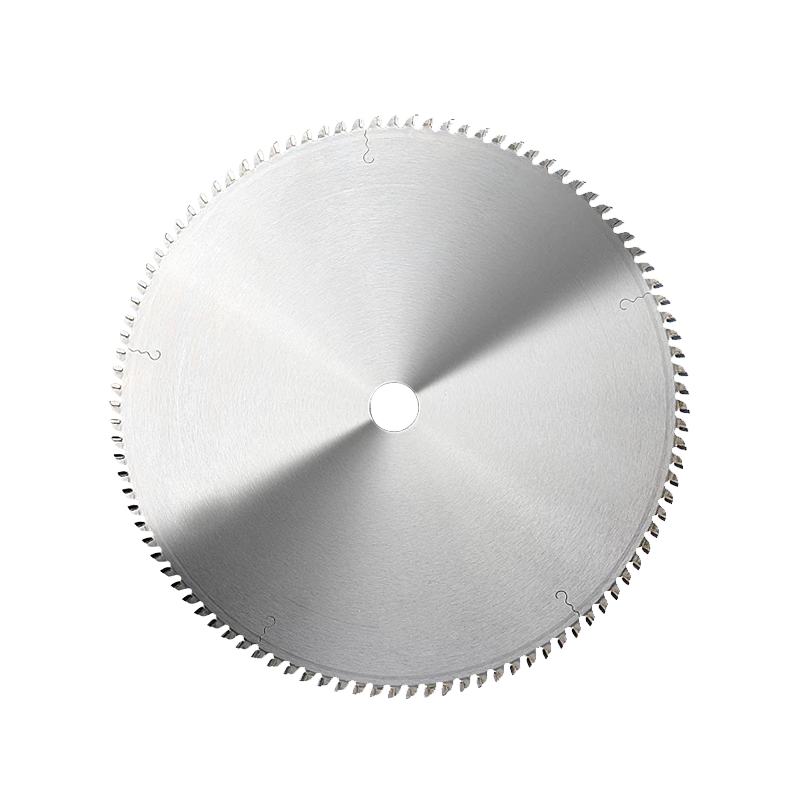
355*72T Edgy Cold Cutter
Advantages Over General-Purpose and Lower-Quality Blades
More Consistent Tooth Geometry
One of the principal differences between a professional industrial blade and an entry-level alternative is consistency. Every tooth must engage the workpiece at the intended angle and depth. Variations in tooth height, rake angle, tip alignment, or grinding quality can produce vibration, uneven loading, and inconsistent cuts.
A carefully manufactured blade uses controlled production processes to reduce these variations. The result is a more predictable tool that operators can use with greater confidence during repeated production cycles. Consistency is particularly important for customers serving automotive, construction, HVAC, and general metal fabrication markets.
Improved Wear Resistance
Low-quality blades may lose their cutting performance quickly because of inferior carbide, weak brazing, poor grinding, or an inadequately prepared blade body. Frequent replacement increases purchasing costs and interrupts production. The use of suitable tungsten carbide tips and controlled manufacturing processes helps the 355*72T blade provide a longer and more stable operating period.
Service life should not be evaluated only by the number of cuts. A blade that produces consistent quality for a longer period may offer a lower total cost of ownership than a cheaper blade that requires frequent changes or creates additional finishing work.
Better Compatibility with Industrial Workflows
The 355*72T blade is developed for professional metal-cutting applications rather than occasional, uncontrolled use. Its design is aligned with production needs such as repeatability, low maintenance, reduced finishing, and stable performance. It can be used in workshops and production facilities where material throughput and product consistency are important.
For buyers, this means the product can be evaluated as part of a complete cutting solution. A suitable blade, cutting machine, motor, clamping fixture, and operating procedure should work together. A manufacturer with experience in both cutting machines and motor accessories is better positioned to understand the relationship between these components.
Lower Secondary Processing Requirements
A rough cut may require grinding, filing, deburring, or additional machining. These operations use labor, create dust or chips, and add time to the manufacturing cycle. By producing a cleaner edge, a precision TCT blade can reduce the need for such secondary work.
Lower secondary processing also supports production planning. When components leave the cutting station in a more usable condition, downstream operations can be scheduled more efficiently. This benefit is particularly meaningful when large volumes of identical pieces must be prepared.
Material and Application Compatibility
Mild Steel
Mild steel is commonly used in structural parts, frames, brackets, pipes, and general fabrication. The 355*72T blade can be suitable for cutting mild steel profiles and components when the machine capacity and blade parameters are correctly selected. Its fine tooth configuration can support clean edges on workpieces that will later be welded or assembled.
Operators should select the correct cutting speed and feed rate according to the section size and profile shape. Forcing the blade through the material can cause tooth overload, heat buildup, vibration, and premature wear. Proper clamping is equally important, particularly when cutting hollow sections or long profiles.
Stainless Steel
Stainless steel requires careful cutting because it can generate significant heat and may work-harden under unsuitable conditions. A carbide-tipped cold-cutting blade can provide a controlled cutting method, provided that the blade specification and operating parameters are appropriate for the grade and thickness of stainless steel.
The cutting system should be kept stable, and the blade should not be allowed to rub unnecessarily against the material. Correct feed pressure helps the teeth cut efficiently instead of sliding over the workpiece. Cooling or lubrication requirements should be determined according to the machine, material, and production process.
Aluminum and Non-Ferrous Metals
Aluminum and other non-ferrous metals have different cutting characteristics from steel. They may produce longer chips, adhere to the tooth surface, or respond poorly to an unsuitable tooth geometry. The 355*72T configuration can be used for selected aluminum and non-ferrous applications when the tooth design, lubrication, and machine settings are appropriate.
Clean tooth gullets, suitable chip clearance, and an appropriate cutting rate help reduce the risk of material buildup. Buyers should confirm the intended material range with the supplier before placing an order, especially when cutting specialized alloys or unusually thin or thick sections.
Pipes and Tubes
Pipes and tubes are widely used in construction, plumbing, HVAC, automotive production, and machinery manufacturing. Cutting hollow sections presents special challenges because the blade may enter and exit the material repeatedly. Vibration can occur if the workpiece is not supported correctly.
The high tooth count of the blade can support a smooth cutting action, but a stable fixture remains necessary. The pipe should be firmly held close to the cutting area, and long sections should be supported to prevent movement during the cut. A clean, square cut is valuable for welding, threading, connecting, and fitting operations.
Bars, Profiles, and Structural Components
Metal bars and structural profiles often require accurate length cutting before assembly or fabrication. A dependable 355 mm blade can help workshops produce repeatable pieces for frames, supports, machinery, and building components. The blade’s performance is optimized when the material is aligned correctly and the machine is capable of maintaining the required cutting stability.
For large or unusually thick structural components, buyers should verify the maximum cutting capacity of the intended machine. The blade should not be used beyond its specified application range.
Applications Across Industrial Sectors
Metal Fabrication
Metal fabrication shops require tools that can handle diverse material forms and changing production schedules. The 355*72T Edgy Cold Cutter is suitable for tasks involving pipes, bars, plates, profiles, brackets, and frames. Its ability to produce clean cuts can reduce the time required for fitting and finishing.
Fabricators can also benefit from a blade that supports repeatable batch work. When a large number of components must be cut to the same length, stable tooth geometry and a rigid blade body help maintain consistency from the first piece to the last.
Construction and Structural Manufacturing
Construction-related manufacturing often involves steel frames, support structures, brackets, rails, and other components that must be prepared accurately before installation. Dimensional errors at the cutting stage can create fitting problems at the construction site. A precision metal-cutting blade helps improve preparation quality before components are transported or assembled.
The blade’s potential for reduced burrs is also useful in construction-related environments, where components may be handled by multiple workers. Cleaner edges improve handling safety, although appropriate protective equipment and safe material handling procedures remain essential.
Automotive Manufacturing
Automotive production relies on repeatability, efficient cycle times, and strict dimensional control. Components such as tubes, brackets, panels, exhaust-related parts, and structural sections may require accurate cutting before forming, welding, or assembly.
A high-tooth-count TCT blade can support the production of cleaner edges and reduce unnecessary rework. In automated or semi-automated lines, predictable blade behavior is valuable because it minimizes process variation and helps maintain consistent output.
HVAC and Plumbing
HVAC and plumbing contractors and manufacturers frequently cut metal pipes, ducts, channels, and fittings. Accurate cuts contribute to tight connections and reliable system installation. A blade capable of producing square, clean edges can simplify joining and reduce adjustment work.
Because HVAC and plumbing materials may vary in thickness and composition, the blade should be paired with appropriate machine settings. Thin-wall materials may require additional support to prevent deformation, while thicker sections may require lower feed pressure and carefully controlled cutting conditions.
General Machinery Manufacturing
Machinery manufacturers often need to prepare a wide range of steel and aluminum components. A versatile circular saw blade can be used during prototype work, maintenance production, replacement-part manufacturing, and regular fabrication. The 355*72T blade’s combination of precision and durability makes it a practical option for workshops seeking a reliable industrial cutting accessory.
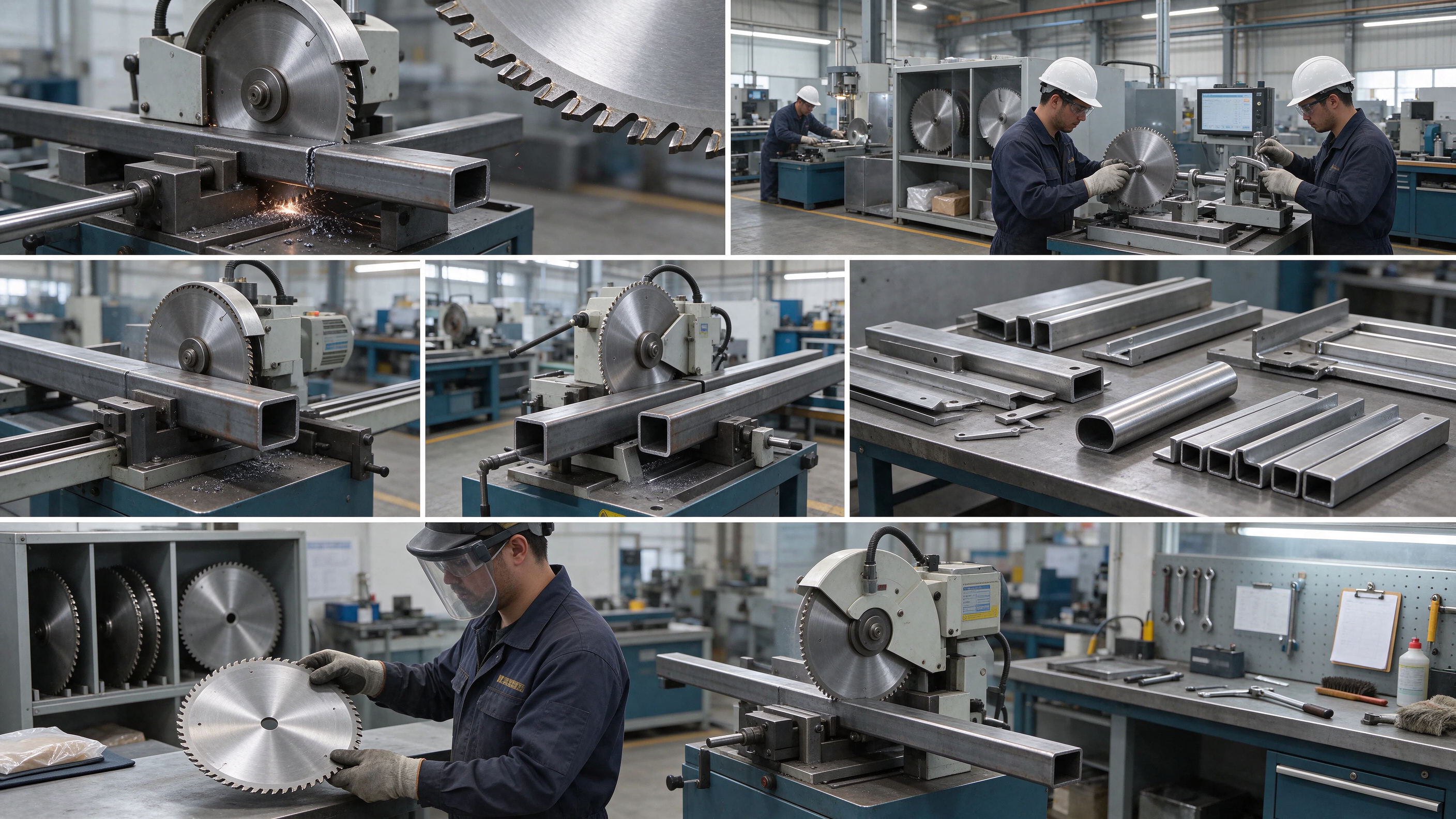
Manufacturing Process and Quality Control
Research and Product Development
Professional blade manufacturing begins with product development. Engineers must consider the target materials, machine type, cutting capacity, tooth count, tip size, body thickness, kerf, heat behavior, and expected production environment. The objective is not simply to add teeth to a circular body, but to create a cutting system in which the tooth geometry and blade structure work together.
Yongkang Saima Machinery Technology Co., Ltd. has developed from a small workshop into an integrated manufacturer combining research and development, production, and sales. Its history includes the development of tool motors, cutting machines, accessories, and related products. This broader product knowledge can support more practical blade development because the company understands how cutting accessories interact with motors and machines.
Blade Body Preparation
The blade body must be produced with suitable flatness, strength, and dimensional stability. The body supports the carbide teeth and transfers cutting force from the machine spindle to the workpiece. If the body is distorted, poorly tensioned, or inconsistent in thickness, the blade may vibrate or deviate during cutting.
Manufacturing controls may include material preparation, precision blanking, surface treatment, tension adjustment, and dimensional inspection. These steps help ensure that the blade remains stable under rotational force and cutting load.
Carbide Tip Selection and Preparation
Carbide tips must be selected according to the intended cutting application. Different materials and cutting conditions may require different combinations of hardness, toughness, geometry, and dimensions. Tips must also be prepared accurately so they can be positioned consistently on the blade body.
Uniform tip preparation contributes to even tooth loading. If one tooth projects too far or sits at an incorrect angle, it may carry excessive force and wear prematurely. Consistent preparation therefore supports both cut quality and blade life.
Tip Brazing
The connection between each carbide tip and the blade body is critical. Brazing must create a strong and reliable joint capable of resisting repeated impact, heat, and vibration. Poor bonding can result in tip movement or failure, presenting a serious safety risk.
Controlled brazing procedures help regulate joint quality and reduce variation between teeth. The brazed area should be properly formed, clean, and free from defects that could weaken the connection. After brazing, the blade can move to grinding and finishing operations.
Precision Grinding
Grinding establishes the final tooth profile, cutting angles, tip height, and edge sharpness. This process requires accuracy because small variations can affect cutting force, noise, vibration, and surface finish. The 72 teeth must work together as a coordinated set rather than as isolated cutting points.
Precision grinding also helps create a consistent rake angle and clearance angle. These angles influence how the tooth enters the workpiece, how chips are formed, and how much friction occurs behind the cutting edge. Proper geometry supports efficient cutting and reduces unnecessary heat generation.
Balancing and Runout Inspection
A circular saw blade rotates at high speed, so balance and runout must be controlled. Excessive imbalance can cause vibration, noise, uneven tooth wear, and poor surface finish. Radial or axial runout can also reduce cutting accuracy and place additional stress on the machine spindle.
Final inspection should evaluate the blade’s overall dimensions, tooth arrangement, flatness, balance, and runout. These checks help identify defects before the product is packaged and shipped to the customer.
Testing and Laboratory Support
Saima Machinery has advanced testing and laboratory equipment as part of its manufacturing capabilities. Testing helps verify whether products meet design expectations and supports continuous improvement. Depending on the product and production stage, quality control may involve dimensional checks, visual inspection, material verification, cutting trials, and durability evaluation.
A manufacturer with its own production and testing resources can respond more effectively to customer feedback. If a customer requires a customized diameter, tooth configuration, packaging specification, or application recommendation, an integrated production structure can make communication and technical adjustment more efficient.
Company Manufacturing Strengths
Integrated Production Capabilities
The company operates as a professional power tool manufacturer with product categories that include mobile cutting machines, metal cut-off machines, aluminum sawing machines, angle grinders, wall planing machines, cutting machine motor accessories, and circular saw blades. This broad portfolio allows the business to understand complete tool systems rather than focusing on one isolated component.
Integrated production can improve coordination between product design, machining, assembly, testing, and delivery. It also allows customers to discuss related products with one supplier, which may simplify sourcing and technical communication.
Multiple Production Lines
Six main production lines support manufacturing capacity and help the company manage different product categories and order requirements. Multiple lines can also provide greater flexibility when customers need regular supply, batch production, or customized specifications.
For international buyers, production capacity is important because a product must remain available after the initial order. A supplier with a structured manufacturing base is better positioned to support repeat orders and maintain delivery schedules during periods of high demand.
Customization Support
Not every customer uses the same machine, material, or production method. Some applications may require a different bore size, tooth geometry, coating, packaging format, or product marking. Saima Machinery provides custom production capabilities for customers with specific requirements.
Customization should be based on technical evaluation rather than simply changing one dimension. The blade body, tooth count, carbide grade, kerf, machine speed, and cutting material must be considered together. Clear communication of drawings, machine information, workpiece dimensions, and expected production volume helps the manufacturer recommend a suitable solution.
Factory and Equipment Investment
The company reports a 30,000-square-meter intelligent production factory, advanced equipment, its own foundry and processing plant, and dedicated testing resources. These facilities support the control of key manufacturing steps and provide a foundation for product consistency.
Factory scale alone does not guarantee quality, but it can support better process organization, capacity planning, equipment maintenance, and inspection. When combined with experienced personnel and documented quality procedures, manufacturing infrastructure becomes a meaningful advantage for industrial customers.
Industry Experience and International Service
With more than 20 years of industry experience and trade coverage in over 35 countries and regions, the company has experience serving customers with different market requirements. International customers often need support with product selection, packaging, documentation, lead times, and after-sales communication.
The company also provides a 24-hour service response commitment. Prompt communication is particularly useful when a customer needs to confirm technical details, resolve a delivery question, or identify a replacement blade for an existing machine.
Competitive Cost and Supply Reliability
For wholesalers, distributors, and industrial users, the purchase price is only one part of the total cost. Supply reliability, defect rates, blade life, delivery performance, packaging, and technical support all affect commercial value. A manufacturer with its own production capacity can provide a more stable basis for cost control and repeat purchasing.
Competitive manufacturing costs are most valuable when they do not compromise cutting performance. The objective should be to achieve a balanced product with reliable quality, practical service life, and consistent availability.
How to Select and Install the Blade
Confirm Machine Compatibility
Before ordering, users should verify the blade diameter, arbor or bore specification, maximum permitted rotational speed, kerf compatibility, guard clearance, and machine cutting capacity. The blade must be suitable for the intended machine. It should never be installed on equipment that exceeds its rated speed or cutting capability.
The machine spindle and mounting flanges should be clean and undamaged. Dirt, chips, rust, or uneven flange surfaces can cause misalignment and runout. The blade should be mounted in the correct direction, with the teeth facing the intended cutting direction.
Match the Tooth Configuration to the Material
The 72-tooth configuration is designed for controlled and relatively smooth metal cutting, but the best result depends on the workpiece. Buyers should provide the supplier with information about material grade, outside dimensions, wall thickness, solid or hollow construction, production volume, and required finish.
For unusually thick solid stock, abrasive materials, or specialized alloys, another tooth configuration may be more appropriate. The product should be selected according to the application rather than based only on diameter or tooth count.
Use Secure Workpiece Clamping
Workpiece movement is a common cause of poor cutting quality. The material should be held firmly and supported on both sides when necessary. Long sections should be supported to prevent sagging, while thin or hollow profiles should be clamped in a way that prevents crushing or vibration.
Proper clamping improves safety and protects the blade from shock loading. A moving workpiece can bend teeth, damage carbide tips, create excessive burrs, and increase the risk of kickback or other machine hazards.
Set Appropriate Cutting Parameters
Rotational speed and feed rate should be selected according to the blade specification, material, cross-section, and machine power. Excessive feed pressure can overload the teeth, while insufficient feed pressure may cause rubbing, heat buildup, and premature dulling.
Operators should observe chip formation, sound, vibration, cut appearance, and motor load. Changes in these indicators may signal that the blade is worn, the workpiece is unstable, or the operating parameters need adjustment.
Maintenance and Service Life
Keep the Blade Clean
Metal chips, resin-like deposits from certain materials, and other contaminants can accumulate on the tooth faces and gullets. This buildup may restrict chip removal and increase friction. The blade should be cleaned using a suitable method that does not damage the carbide tips or blade body.
Cleaning should be performed after the blade has stopped completely and has been removed or safely isolated from the machine. Operators should use appropriate personal protective equipment when handling sharp teeth and metal chips.
Inspect Teeth and Brazed Joints
Regular inspection can identify chipped tips, cracked teeth, uneven wear, or loose carbide sections before they cause greater damage. A blade with a damaged tooth should not continue operating without professional evaluation. Continuing to use a damaged blade can affect the workpiece, machine, and operator.
Inspection is especially important after an unexpected impact, workpiece movement, or abnormal vibration. A professional blade service provider may be able to regrind or repair selected blades, depending on the extent of wear and damage.
Monitor Cut Quality
Cut quality provides useful information about blade condition. Increasing burrs, rough edges, angled cuts, excessive noise, vibration, discoloration, or rising motor load may indicate that the blade needs maintenance or replacement. Operators should not wait until a blade fails completely.
Maintaining a record of blade usage and cutting results can help production teams identify the most effective replacement interval. This approach is more reliable than replacing blades only according to a fixed calendar schedule.
Store Blades Correctly
Unused and serviced blades should be stored in a dry, clean location where the teeth cannot contact hard surfaces or other tools. Blades should be protected from impact, moisture, and contamination. If multiple blades are stored together, separators or protective packaging should be used to prevent tooth damage.
Economic and Environmental Benefits
A high-quality blade can provide economic benefits throughout the production process. Longer service life reduces replacement frequency, while clean cuts reduce labor spent on deburring and finishing. Improved accuracy can also reduce rejected components and material waste.
Lower waste is especially important when processing expensive stainless steel, aluminum, or specialty alloys. Every inaccurate cut can consume valuable material and production time. By supporting repeatable cutting, the 355*72T blade can contribute to more efficient resource use.
The cold-cutting approach may also reduce the amount of dust and abrasive debris associated with some alternative cutting methods. However, metal cutting still produces chips and noise, so suitable extraction, guarding, housekeeping, and personal protective equipment remain necessary.
Environmental performance should be assessed as part of the complete process. A durable blade that lasts longer may reduce the number of discarded tools. Efficient cutting can lower energy and labor use per finished component, especially in high-volume applications.
Purchasing Considerations for Distributors and Industrial Buyers
Wholesale and industrial buyers should evaluate more than the product name. Important questions include the available bore sizes, recommended machines, material compatibility, packaging method, minimum order quantity, production lead time, inspection process, replacement policy, and customization options.
Buyers should also request technical information for their specific application. The same 355 mm diameter may be used in different machines with different spindle speeds and mounting arrangements. Confirming these details before purchase helps reduce installation problems and improves customer satisfaction for distributors.
Packaging is another important consideration. Circular saw blades must be protected against impact and moisture during handling and shipping. Secure packaging should prevent tooth contact with hard surfaces and preserve the blade’s flatness during transport.
For private-label or distribution customers, product marking, labels, cartons, manuals, and documentation may be customized. A manufacturer with integrated production and export experience can help coordinate these requirements more efficiently.
Technical Overview
| Item | Specification or Benefit |
|---|---|
| Product type | Tungsten carbide-tipped circular cold-cutting saw blade |
| Nominal diameter | 355 mm |
| Tooth count | 72 teeth |
| Primary application | Precision cutting of selected steel, stainless steel, aluminum, and non-ferrous metal materials |
| Cutting characteristics | Smooth cutting, controlled heat generation, reduced burr formation, and repeatable edge quality when correctly applied |
| Typical industries | Metal fabrication, construction, automotive, HVAC, plumbing, and machinery manufacturing |
| Key construction feature | Carbide-tipped teeth mounted on a precision-manufactured blade body |
| Recommended use | Compatible professional metal-cutting machines operated within rated speed and capacity limits |
| Supplier capabilities | Research and development, manufacturing, testing, customization, international supply, and technical support |
The table summarizes the principal product information, but it should not replace a technical confirmation for a specific machine or material. Buyers should confirm the complete specification before ordering, particularly the bore size, blade thickness, maximum speed, and application parameters.
Frequently Asked Questions
What does 355*72T mean?
The number 355 refers to the blade’s nominal outside diameter in millimeters. The designation 72T means that the blade has 72 teeth. Together, these specifications describe a 355 mm circular saw blade with a relatively fine tooth configuration for controlled metal cutting.
What materials can the blade cut?
The blade is intended for selected metal-cutting applications involving materials such as mild steel, stainless steel, aluminum, and other non-ferrous alloys. Actual compatibility depends on the material grade, thickness, profile, machine, tooth geometry, and operating parameters. Users should confirm specialized applications with the supplier.
Is the blade suitable for every 355 mm cutting machine?
No. Diameter alone does not establish compatibility. The arbor size, maximum permitted speed, blade thickness, kerf, guard clearance, machine power, and mounting arrangement must all match. The blade should only be used on a machine approved for the relevant type of metal-cutting blade.
Why use a 72-tooth blade instead of one with fewer teeth?
A higher tooth count can provide smoother engagement, improved edge quality, and reduced burr formation when the blade is correctly matched to the application. A lower tooth count may be more suitable for certain thicker or more aggressive cutting tasks. The correct choice depends on the material and production requirements.
Does a TCT blade eliminate the need for deburring?
No blade can guarantee that deburring will never be required. However, a precision carbide-tipped blade can reduce burr formation compared with unsuitable or worn cutting tools. Workpiece stability, tooth condition, feed rate, material type, and machine alignment also affect the final edge.
How can I extend blade life?
Use the correct machine, speed, feed rate, clamping method, and material range. Keep the blade clean, prevent workpiece movement, avoid forcing the cut, inspect the teeth regularly, and store the blade correctly. Early maintenance or replacement is preferable to continuing with a damaged or severely worn blade.
Can the blade be customized?
Customization may be available for selected requirements, such as tooth arrangement, bore dimensions, packaging, labeling, and other production details. The supplier should receive complete information about the machine, workpiece, material, cutting volume, and required finish before confirming a customized design.
What makes the manufacturer suitable for wholesale supply?
The manufacturer offers integrated research, production, testing, and sales capabilities. Its product range includes cutting machines, motor accessories, and circular saw blades. Multiple production lines, a large intelligent factory, customization capability, international service experience, and technical support provide a foundation for repeat wholesale and industrial orders.
What safety precautions should operators follow?
Operators should use the machine guard, wear suitable eye and hearing protection, keep hands away from the blade, secure the workpiece, inspect the blade before use, and follow the machine manufacturer’s instructions. The blade must not be used above its rated speed or with damaged teeth, cracked components, or loose carbide tips.
Why Choose This Industrial Cutting Solution?
The 355*72T Edgy Cold Cutter combines a 355 mm format, 72 precision teeth, carbide-tipped construction, and a design intended for controlled metal cutting. Its main value lies in the relationship between these features. High tooth count supports smooth cutting, carbide tips improve wear resistance, and a carefully manufactured blade body helps maintain stability.
Compared with general-purpose blades, the product is intended to provide more predictable results in professional applications. Reduced burrs, lower finishing requirements, stable dimensions, and longer service life can improve the total efficiency of a production process. These advantages become more significant when the blade is used continuously in fabrication, construction, automotive, HVAC, plumbing, or machinery manufacturing.
The manufacturer adds value through product development, factory capacity, quality control, customization, and international support. Its experience in tool motors, cutting machines, accessories, and saw blades provides a broader technical perspective than a supplier focused solely on one consumable product. This makes it possible to discuss the blade as part of a complete cutting system.
For customers seeking a dependable metal-cutting accessory, the most important step is to match the blade with the correct machine and material. Once compatibility is confirmed, the 355*72T configuration can provide a practical combination of cutting quality, production efficiency, durability, and reduced maintenance.
Conclusion
The 355*72T Edgy Cold Cutter is designed for professionals who require accurate and efficient metal cutting. Its 72 carbide-tipped teeth support smooth, controlled cutting and can help reduce burrs, heat-related problems, and secondary finishing work. The blade is suitable for a broad range of industrial uses, including metal fabrication, construction, automotive manufacturing, HVAC, plumbing, and machinery production, provided that the material and machine specifications are appropriate.
Its performance is supported by the manufacturing capabilities of Yongkang Saima Machinery Technology Co., Ltd. The company combines research and development, multiple production lines, advanced equipment, laboratory and testing resources, customization capability, and international service experience. These strengths help create a supply platform for buyers who need both reliable products and responsive technical support.
When correctly selected, installed, and maintained, the 355*72T blade can contribute to cleaner edges, more consistent dimensions, improved productivity, and lower overall cutting costs. It is not simply a replacement component; it is an important part of a complete metal-cutting process designed around precision, durability, and dependable industrial performance.
References
1. General principles of carbide-tipped circular saw blade design and metal-cutting tool geometry.
2. Industrial guidance on circular saw blade selection, tooth configuration, cutting parameters, and workpiece clamping.
3. Manufacturer-provided product information for the 355*72T Edgy Cold Cutter.
4. Manufacturer-provided information concerning research and development, production facilities, testing resources, product categories, and customization capabilities.
5. General occupational safety practices for powered circular saws, metal-cutting machinery, blade handling, and personal protective equipment.