English
 عربى
عربى

You don't see them. But they're inside every motor that runs a cutting machine. The stator. It's the stationary part of the motor that generates the magnetic field. Without it, the motor doesn't turn. A cutting machine motor accessories stator manufacturer makes this critical component. It has to be wound right. It has to be insulated right. It has to fit the motor housing precisely. If the stator fails, the machine stops.
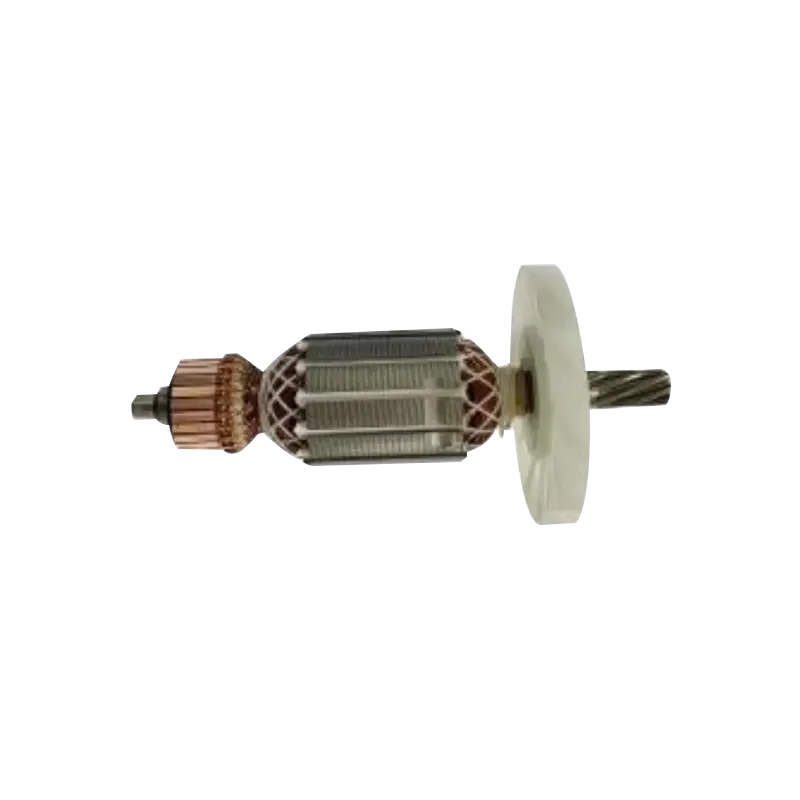
What a Stator Does in a Cutting Machine Motor
It creates the rotating magnetic field
The stator is a ring of laminated steel with copper windings wrapped around it. When current flows through the windings, it creates a magnetic field that rotates. That rotating field pulls the rotor around, spinning the motor shaft and driving the cutting blade. A cutting machine motor accessories stator manufacturer has to get the winding pattern and the number of turns right. Get it wrong, and the motor won't generate enough torque, run rough, or overheat.
It handles the electrical load
Cutting machines pull heavy current. The windings in the stator carry that current and generate the magnetic field. A cutting machine motor accessories stator manufacturer uses copper wire with the right gauge. Too thin and it overheats. Too thick and the winding count is off, changing the motor's electrical characteristics. The insulation has to withstand the heat and vibration of a cutting machine.
It dissipates heat
Cutting machines run for hours. The stator gets hot. A cutting machine motor accessories stator manufacturer uses materials and designs that allow heat to escape. The laminations are stacked to reduce eddy currents. The windings are varnished to improve heat transfer. The stator fits tightly against the motor housing so heat can move out through the metal case.
What Goes into a Cutting Machine Motor Stator
Laminated steel core
The stator core is made from thin sheets of electrical steel, stacked and bonded together. A cutting machine motor accessories stator manufacturer uses high-grade silicon steel for the laminations. The steel is chosen for its magnetic properties—high permeability and low core loss.
Copper windings
The windings are the electrical circuit. A cutting machine motor accessories stator manufacturer winds copper wire around the stator teeth in a specific pattern. The wire gauge, the number of turns, and the winding pattern determine the motor's electrical characteristics.
Insulation
The windings are insulated from the stator core and from each other. A cutting machine motor accessories stator manufacturer uses insulating materials—enamel on the wire, slot liners, and varnish. The insulation has to withstand high temperatures and prevent short circuits.
Terminals and connections
The stator windings need to connect to the power supply. A cutting machine motor accessories stator manufacturer provides terminals or leads that are soldered or welded to the windings. The connections have to be secure and low-resistance.
Common specs for cutting machine motor stators:
- Core material: silicon steel laminations
- Core stack height: 20mm to 100mm (depending on motor size)
- Winding gauge: 0.2mm to 1.5mm
- Winding count: matched to motor design
- Insulation class: Class F (155°C) or Class H (180°C)
- Test voltage: 1500V to 3000V hi-pot
- Resistance: matched to motor spec
- Mounting: bolted or pressed into motor housing
Where Cutting Machine Motor Stators Are Used
Circular saws
The stator is inside the motor housing. A cutting machine motor accessories stator manufacturer produces stators for circular saw motors. The motor has to spin at high speed and handle heavy loads.
Band saws
Band saw motors run continuously. A cutting machine motor accessories stator manufacturer makes stators that can handle continuous operation without overheating. The insulation has to hold up over hours of use.
Table saws and miter saws
These saws need starting torque. A cutting machine motor accessories stator manufacturer winds the stator to provide high starting torque. The motor has to spin up quickly and maintain speed under load.
Angle grinders and cut-off tools
These tools run at high speed. A cutting machine motor accessories stator manufacturer makes stators for universal motors. The stator has to handle the high speed and the vibration.
What to Look For
Winding quality
The windings have to be neat and tight. A cutting machine motor accessories stator manufacturer with good winding machines and trained operators will produce consistent, reliable stators. Sloppy windings cause uneven magnetic fields.
Insulation integrity
The insulation has to be superb. A cutting machine motor accessories stator manufacturer tests each stator with a hi-pot test to check the insulation. The test passes if there are no shorts or breakdowns. If the insulation fails, the motor shorts out.
Core quality
The laminations have to be good quality. A cutting machine motor accessories stator manufacturer uses laminations that are burr-free and flat. Burrs cause shorts. Uneven stacking reduces magnetic efficiency. Good core quality is the foundation of a good stator.
Copper quality
The wire has to be pure copper. A cutting machine motor accessories stator manufacturer uses copper wire with high conductivity. The resistance has to match the motor spec. If the resistance is off, the motor won't perform properly.
Testing and documentation
The stator is tested after assembly. A cutting machine motor accessories stator manufacturer provides test certificates—resistance, insulation, inductance, and hi-pot results. Good manufacturers document the test results for traceability.
Fitting
The stator has to fit the motor housing. A cutting machine motor accessories stator manufacturer machines the stator to the correct dimensions. The stator has to press into the housing snugly but not too tight. If it's too loose, heat transfer is poor. If it's too tight, the core can crack.
The stator is the part that makes the motor work. It's easy to overlook, but it's where the power comes from. A cutting machine motor accessories stator manufacturer that winds the coil right, insulates it properly, and tests it thoroughly is the one to trust. Choose the right one, and your cutting machines will run strong and last long.